Lot Details
Description
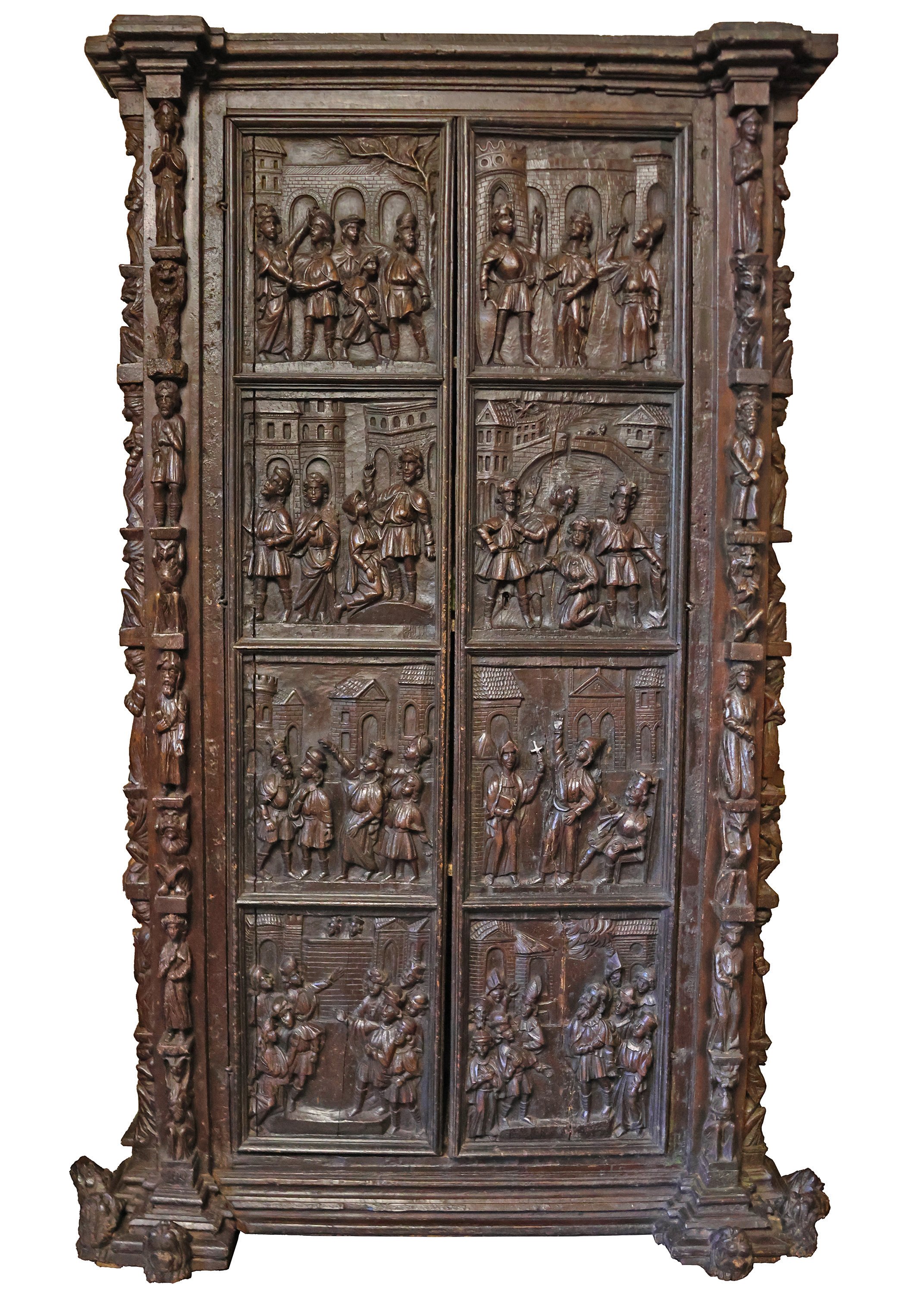
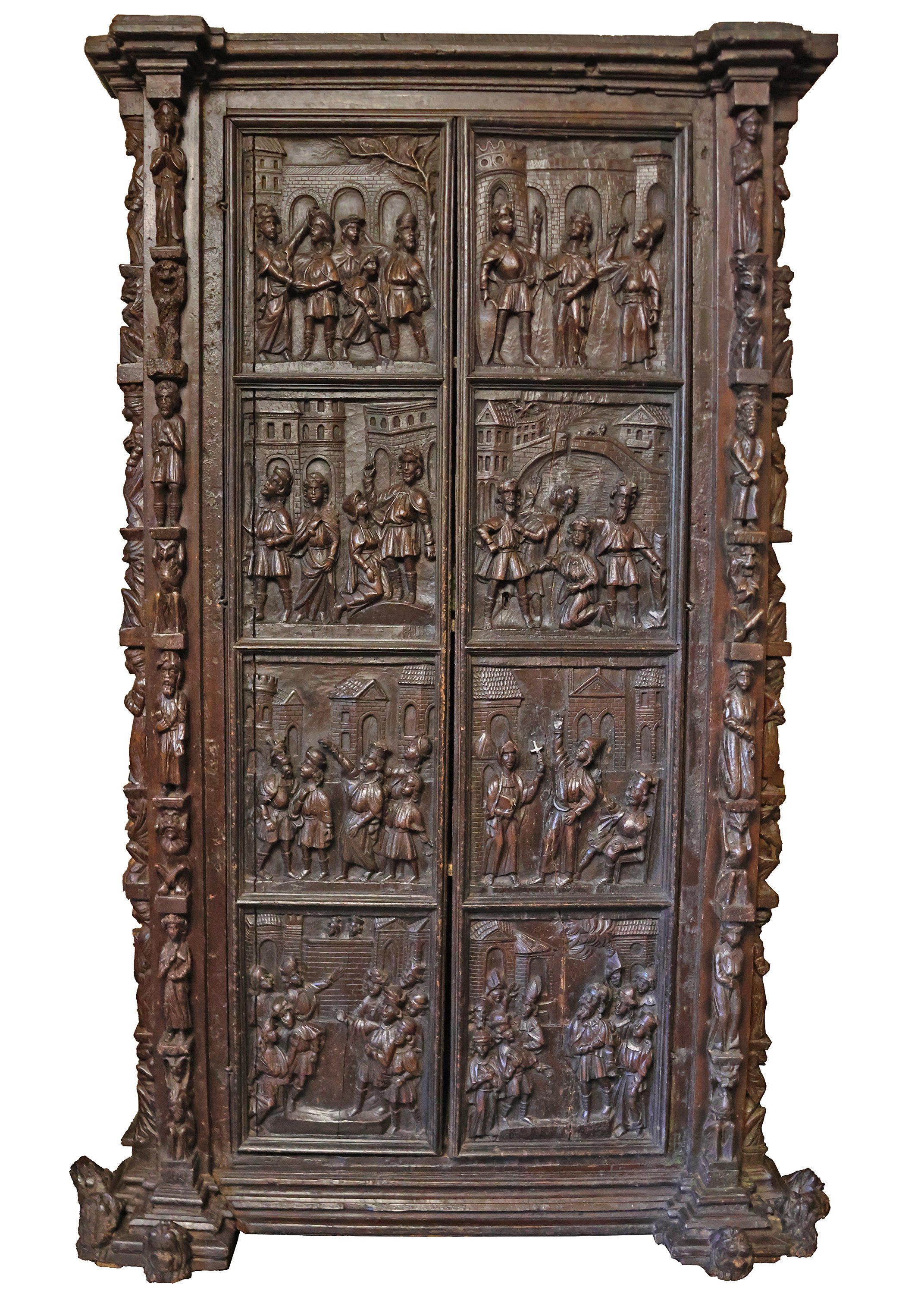
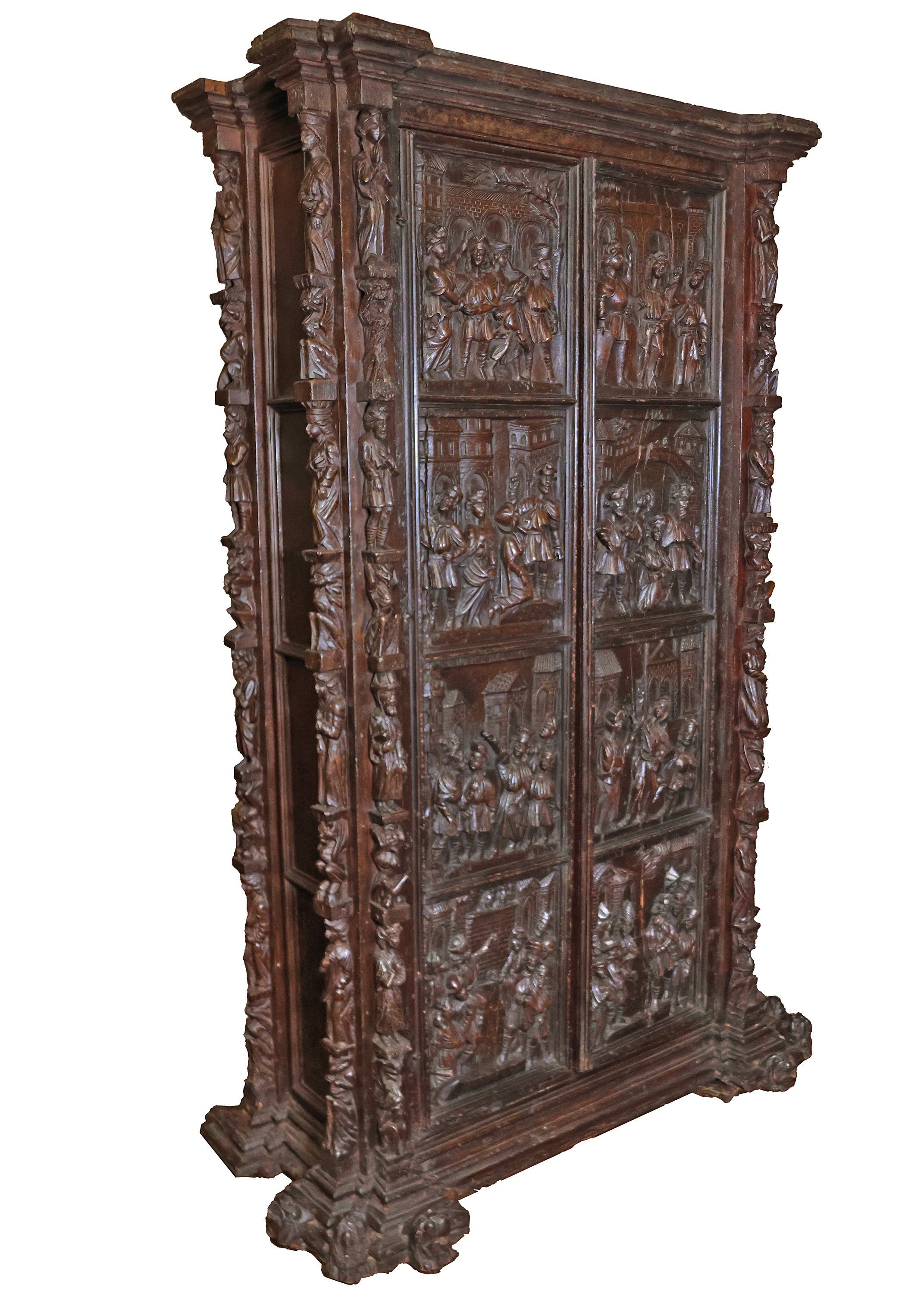
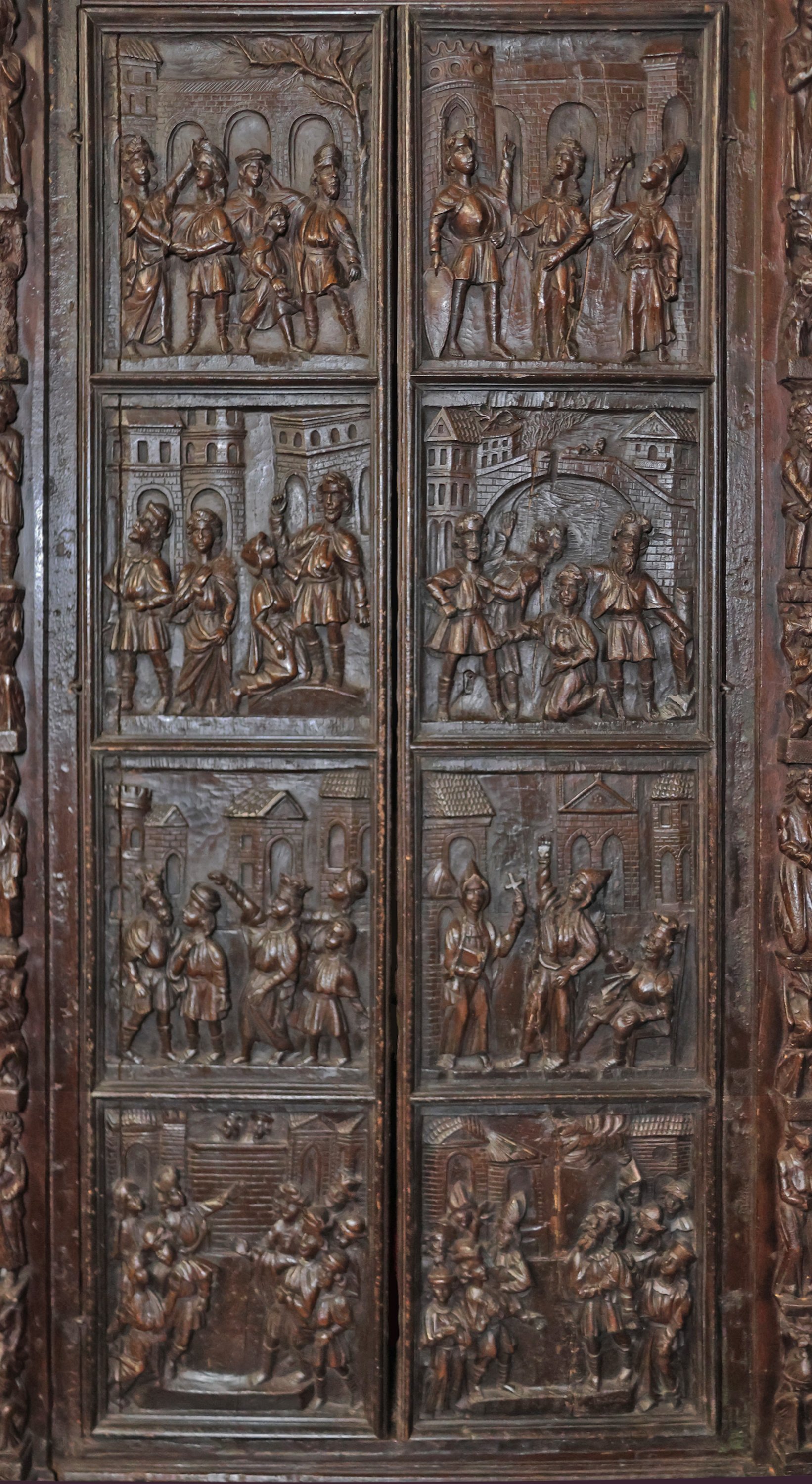
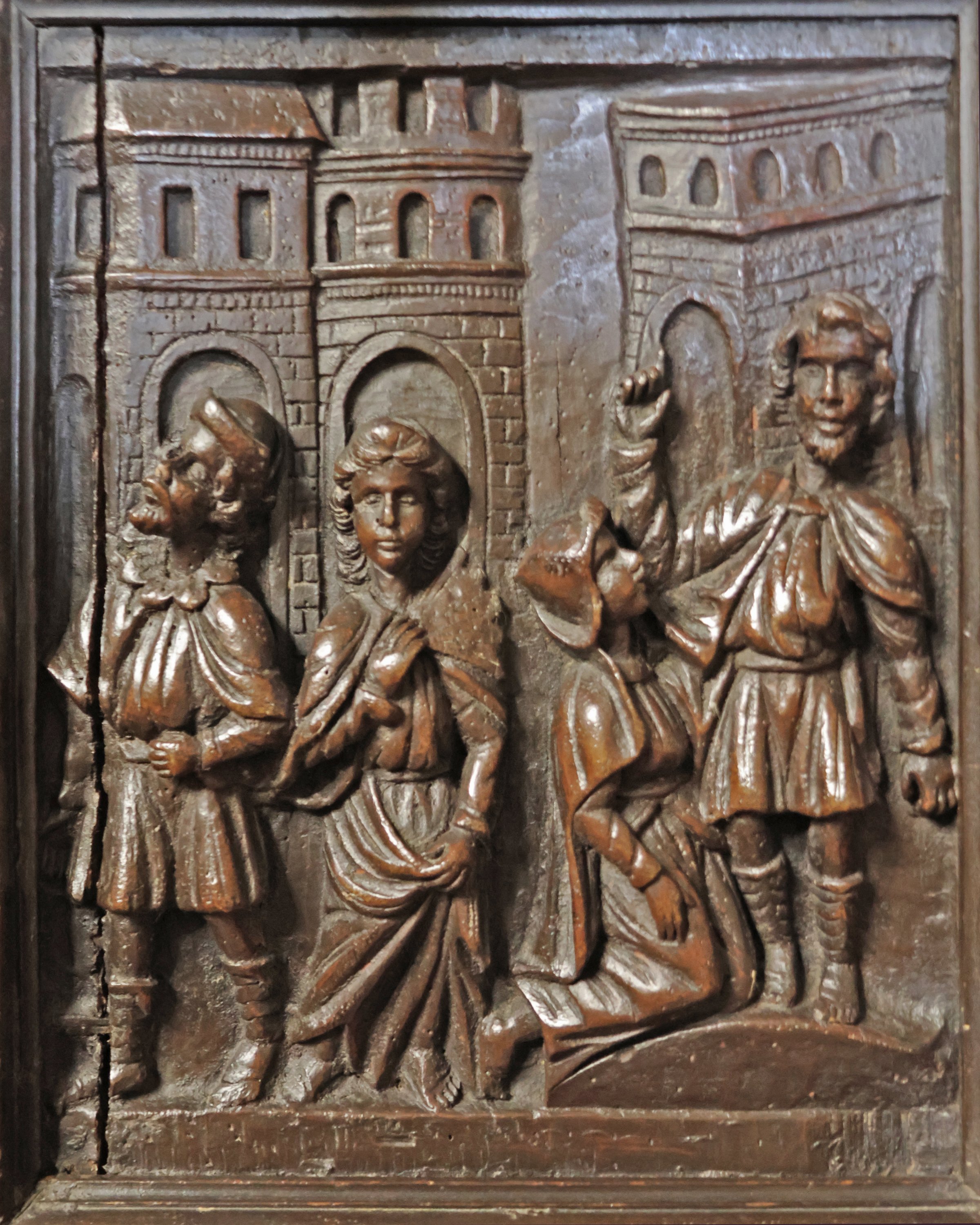
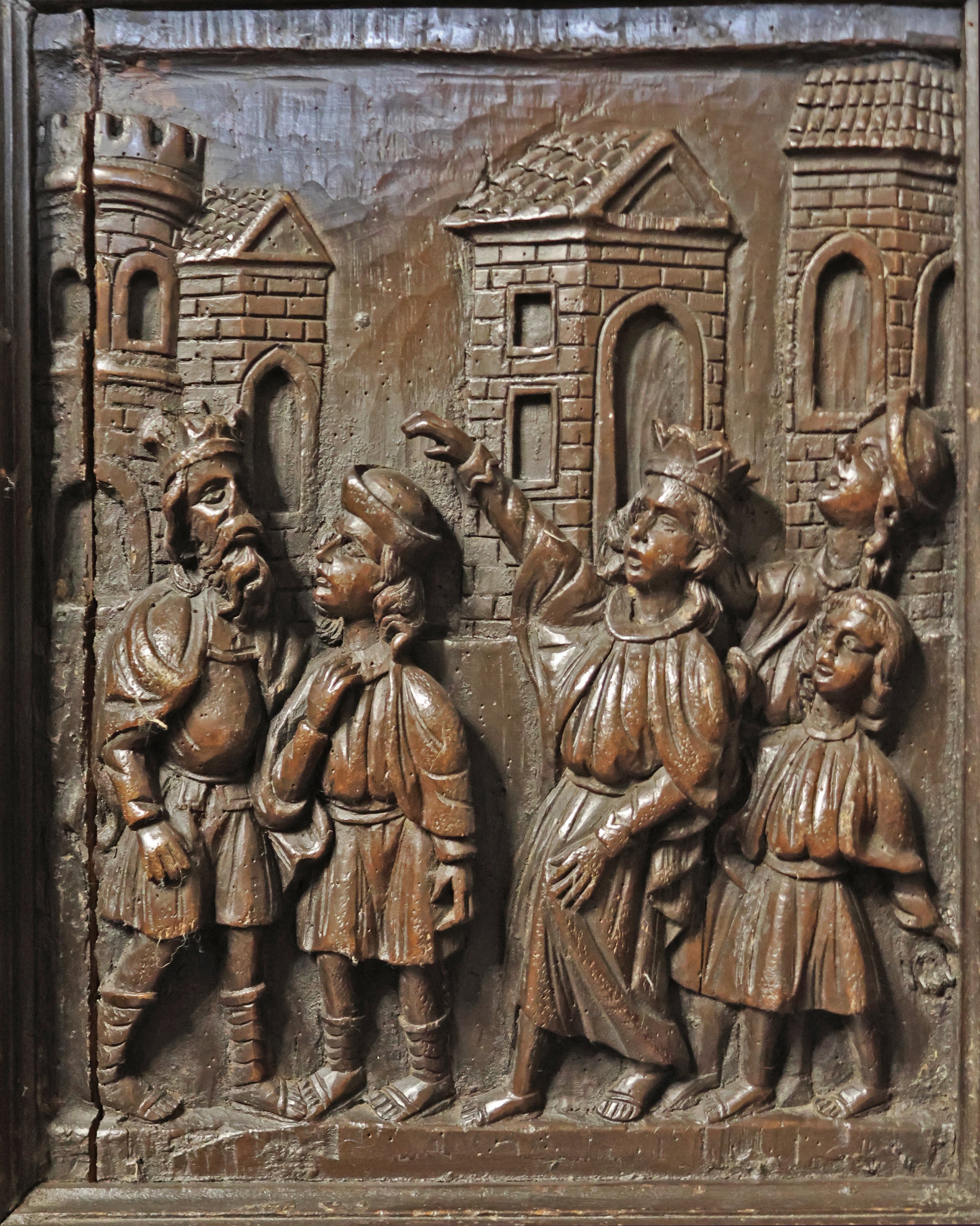
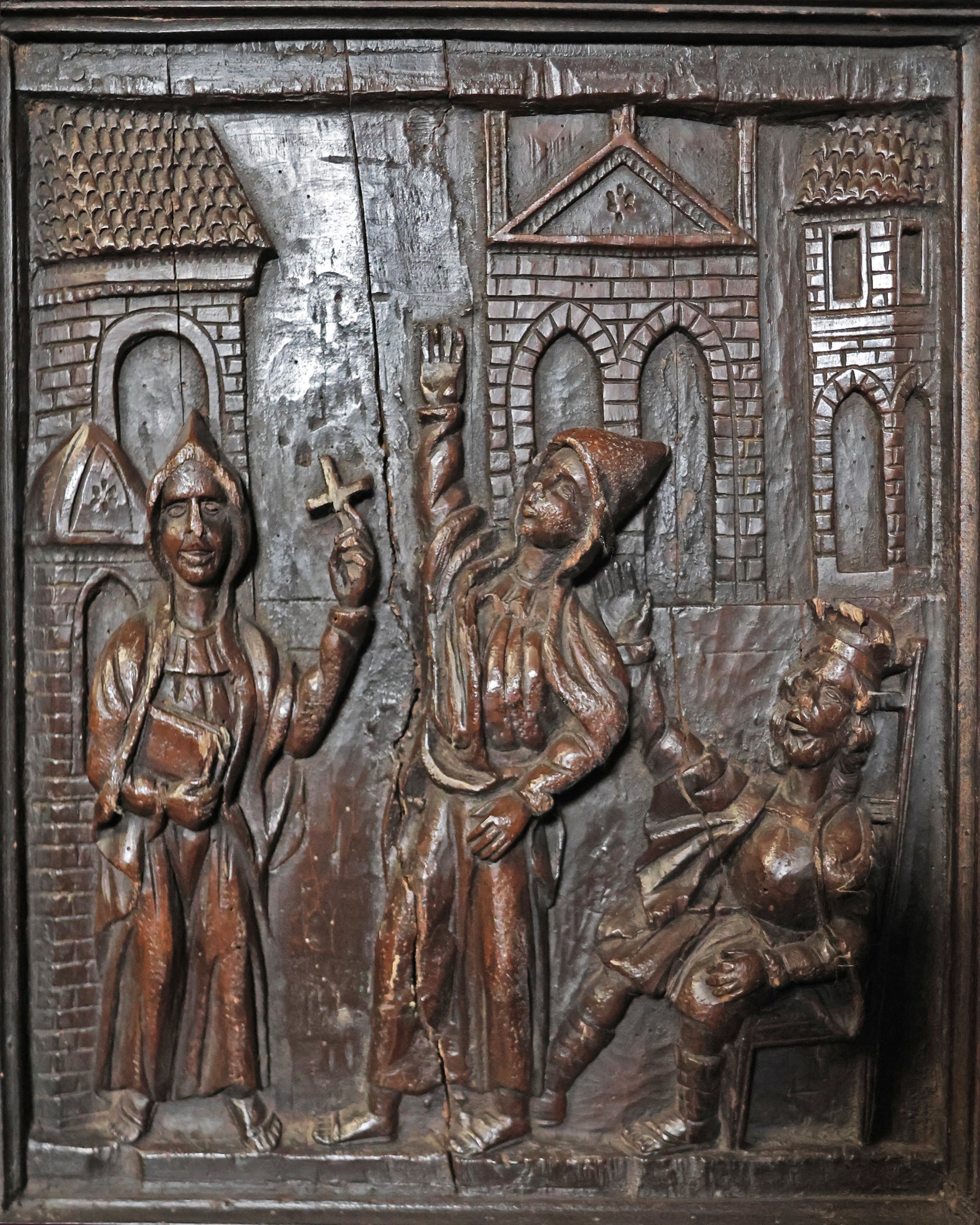
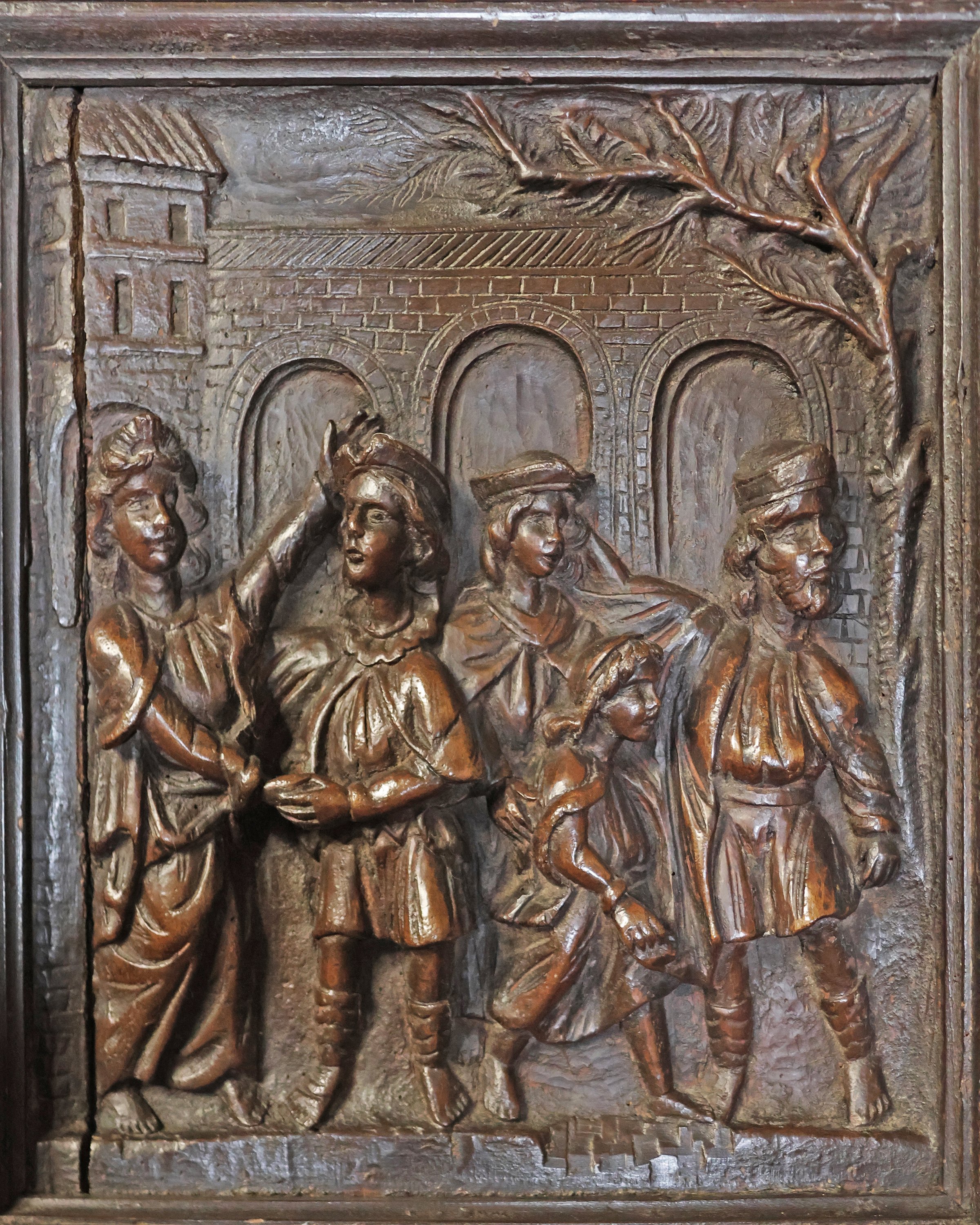
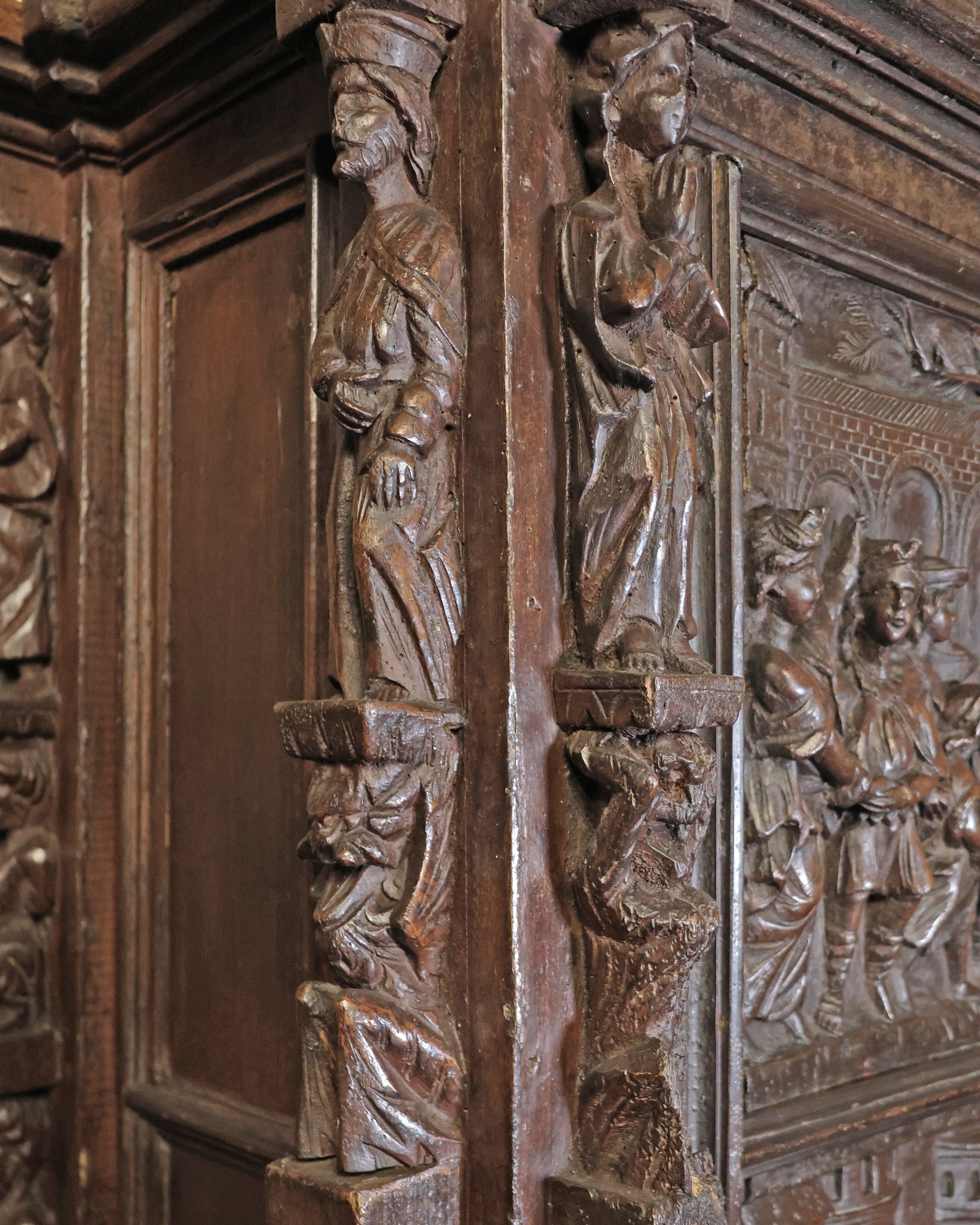
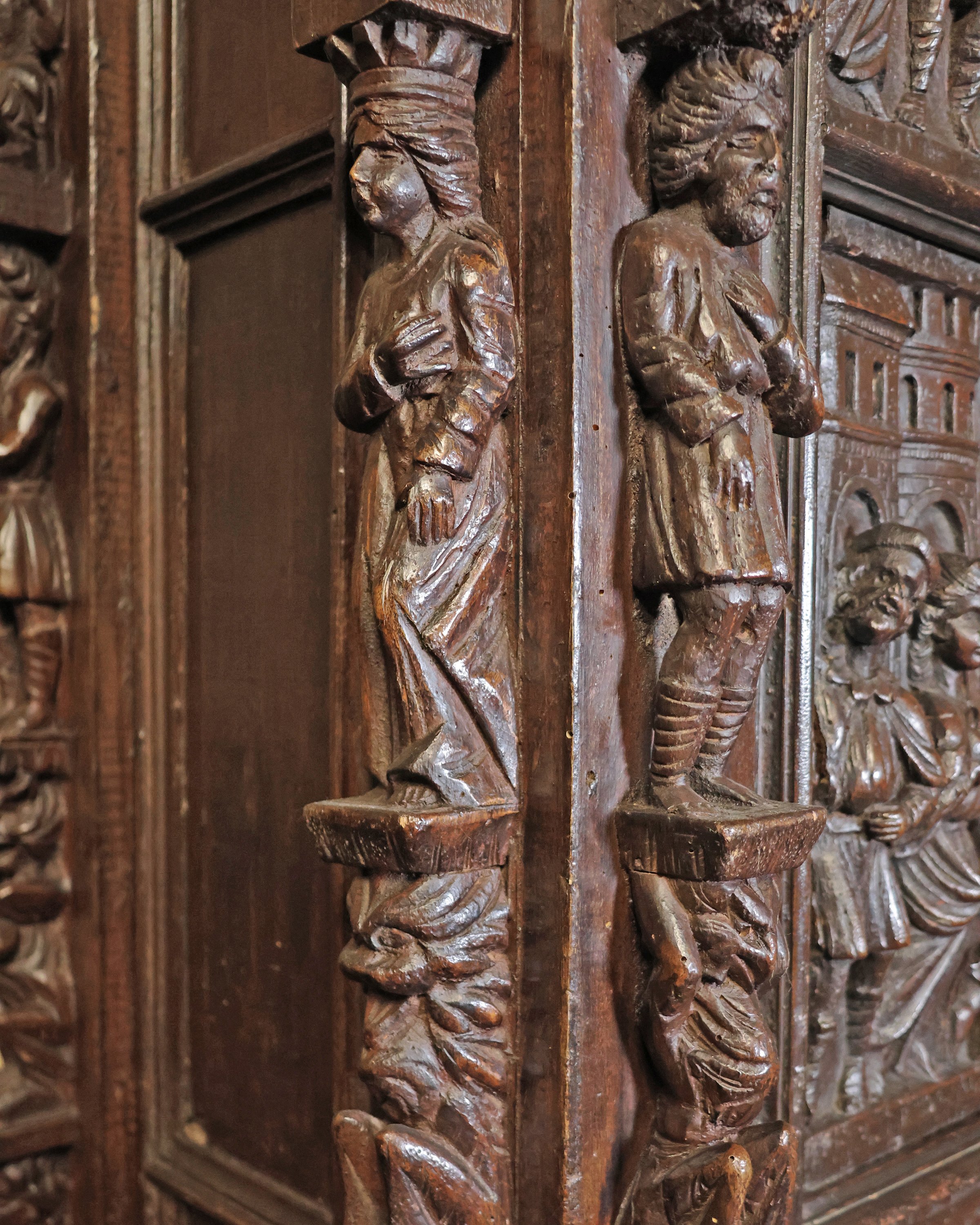
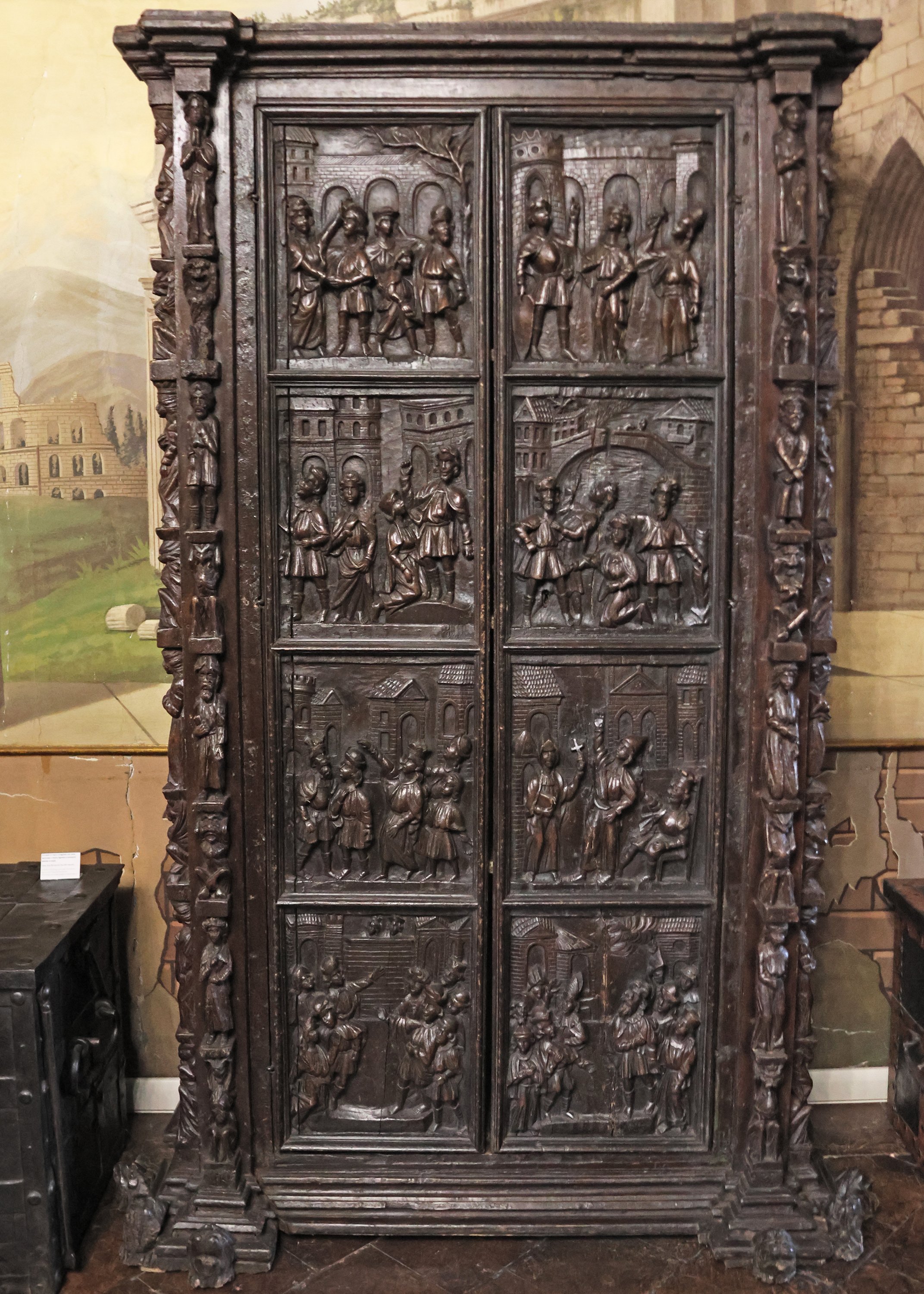
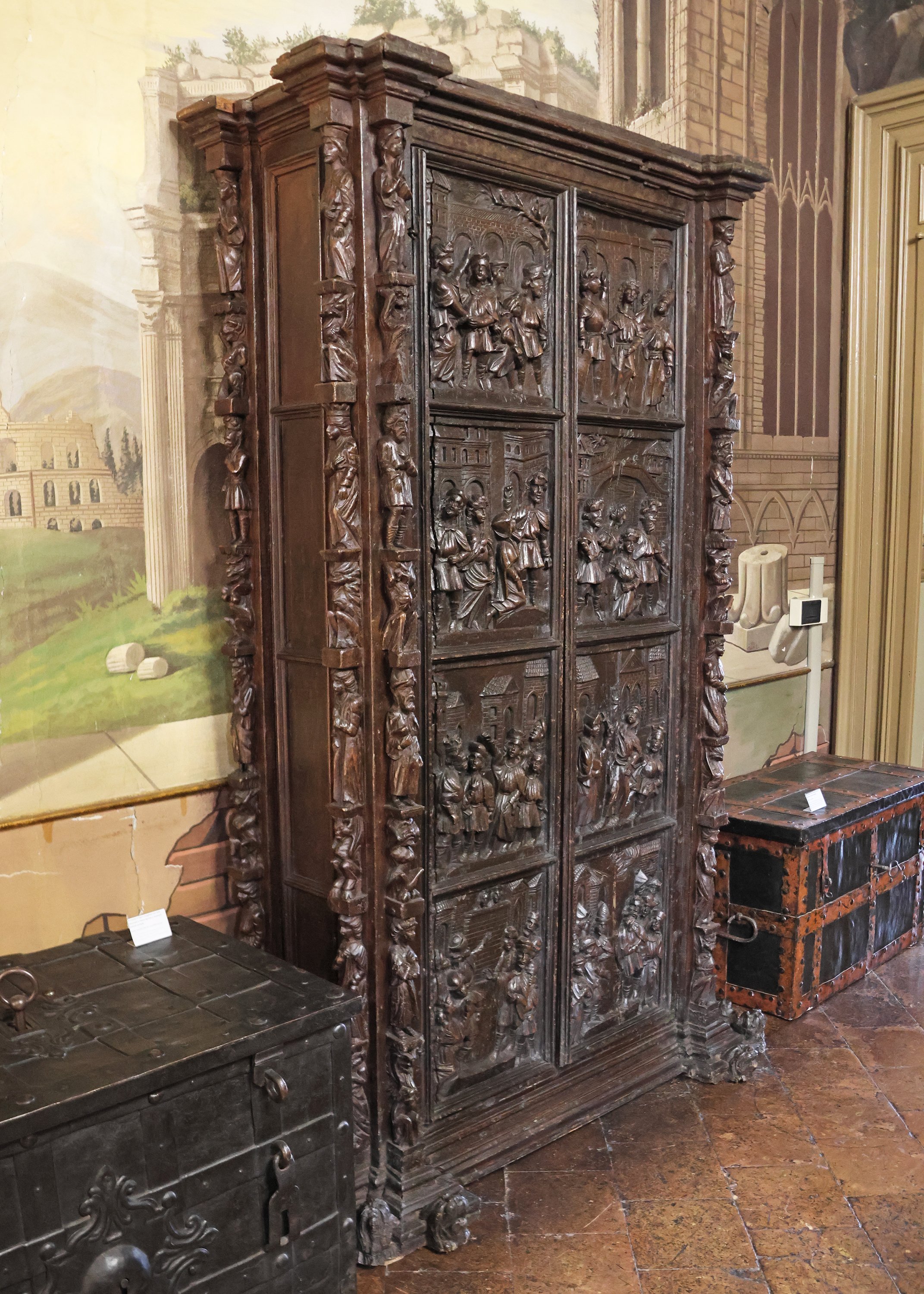
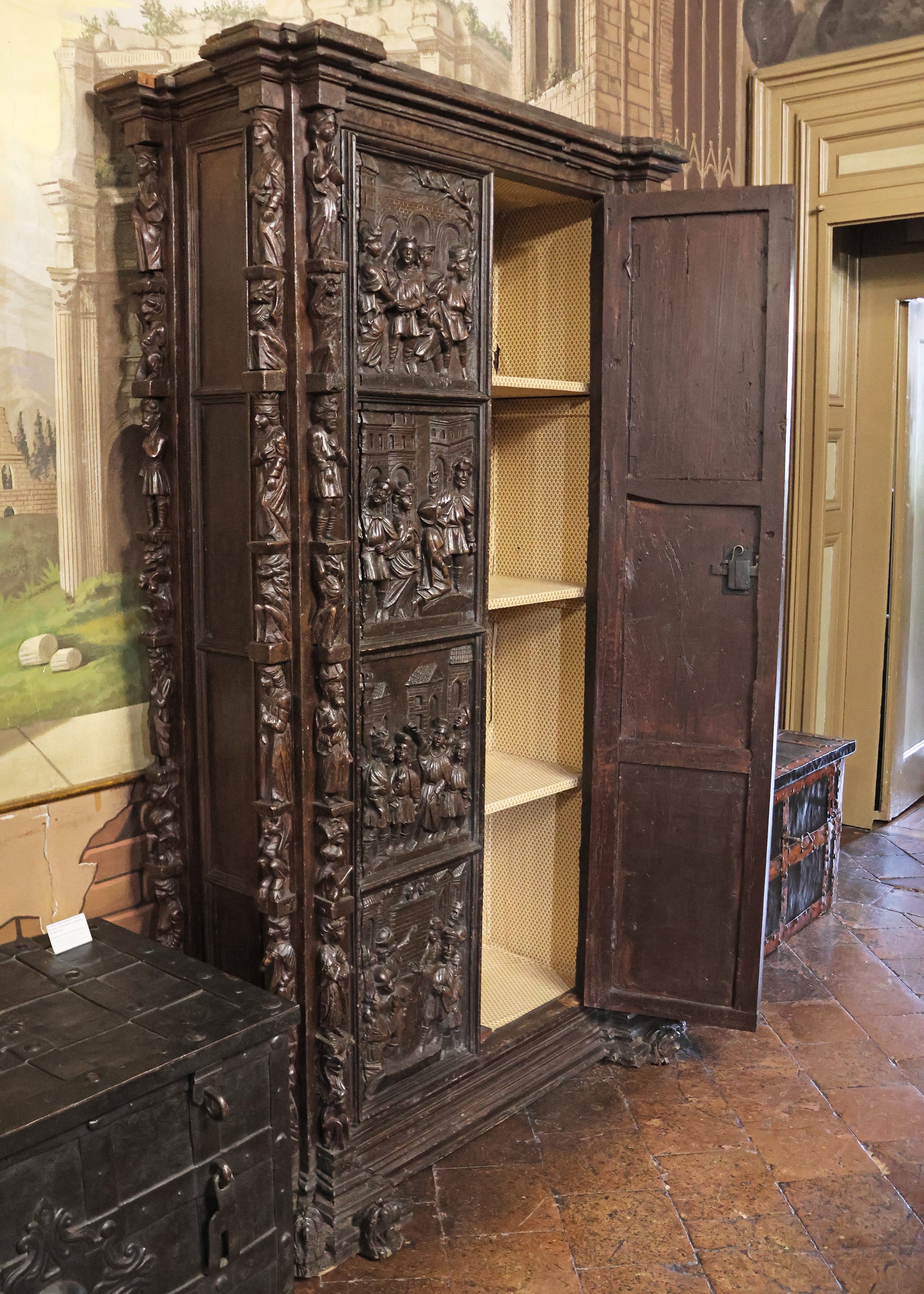
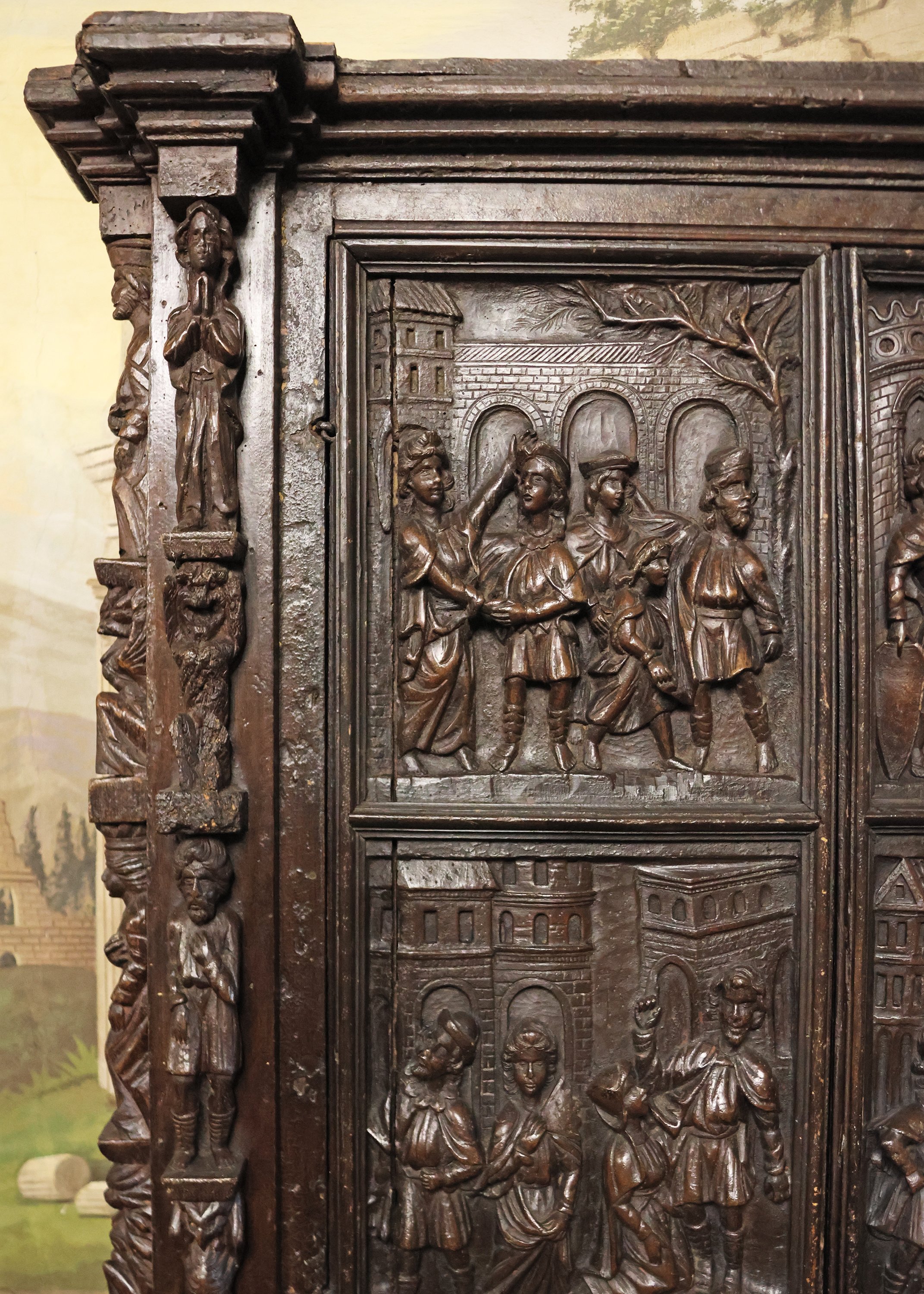
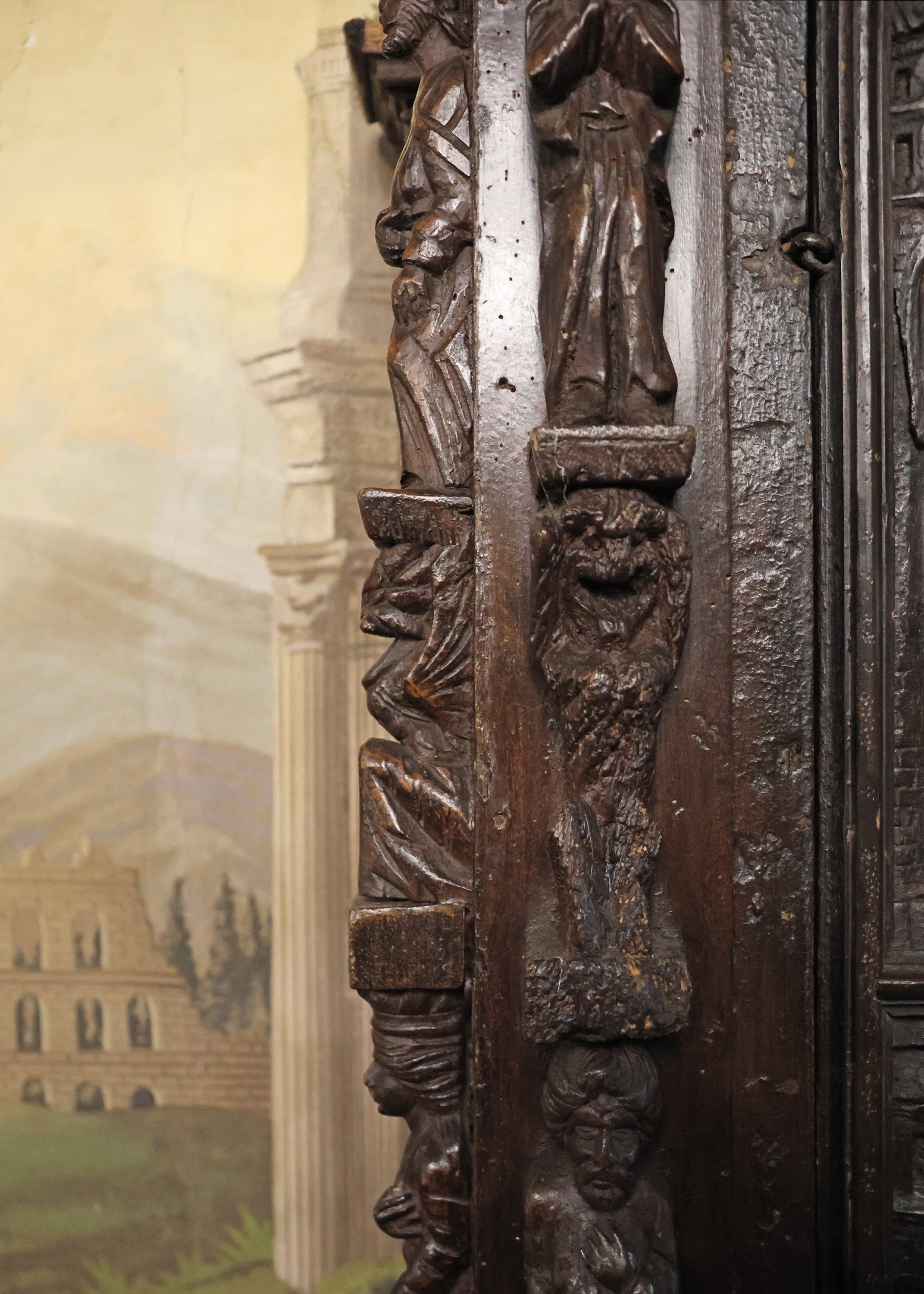
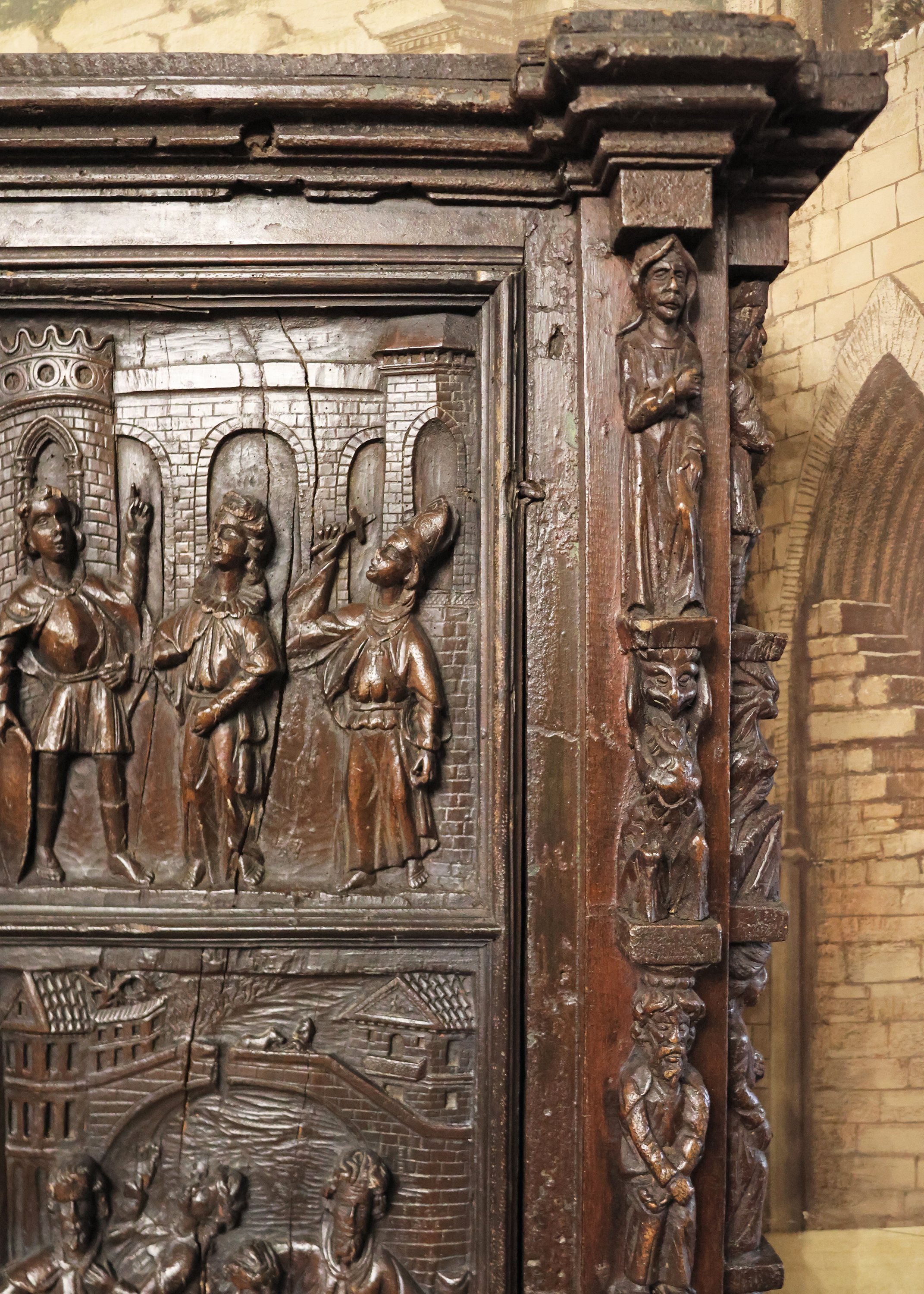
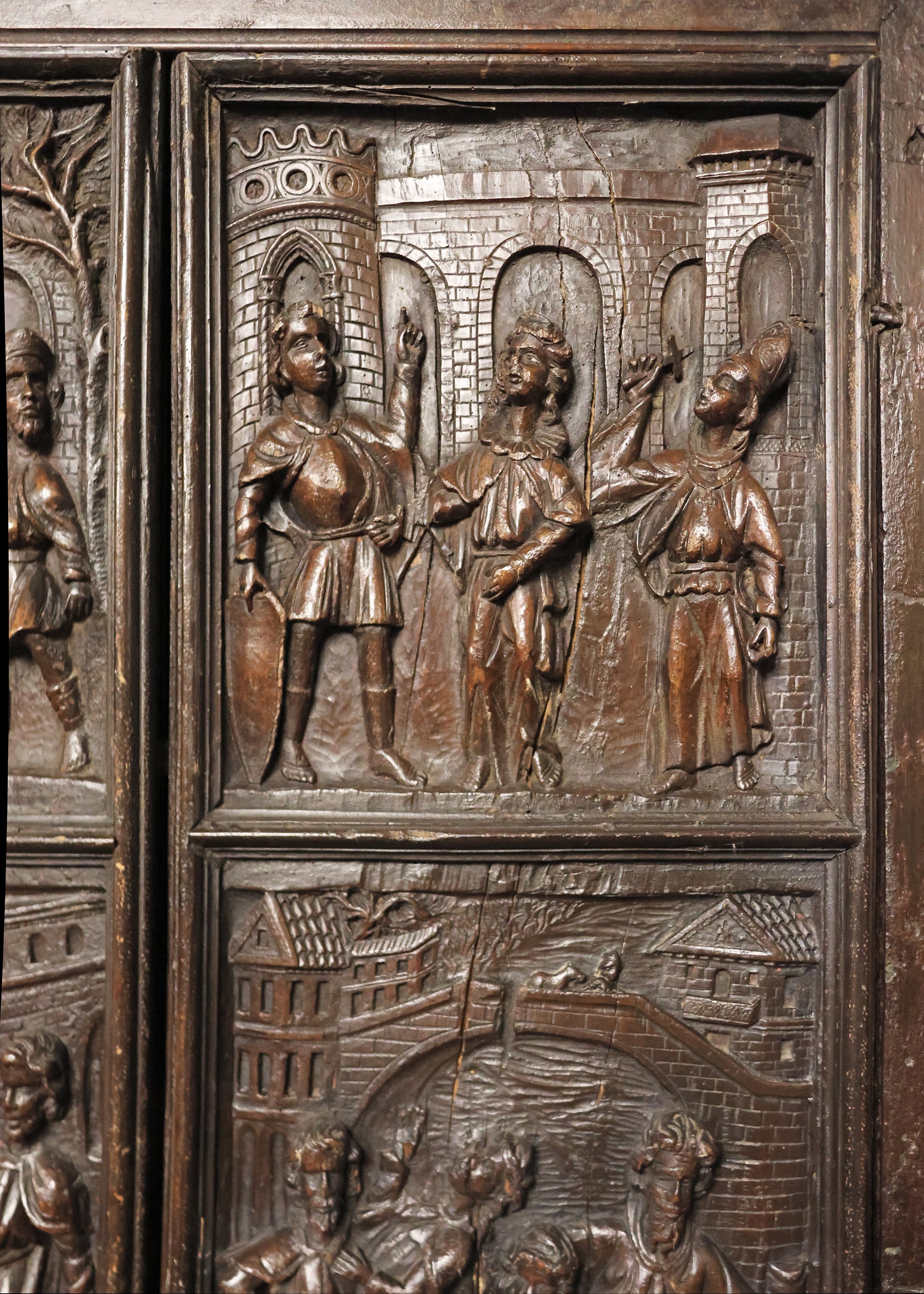
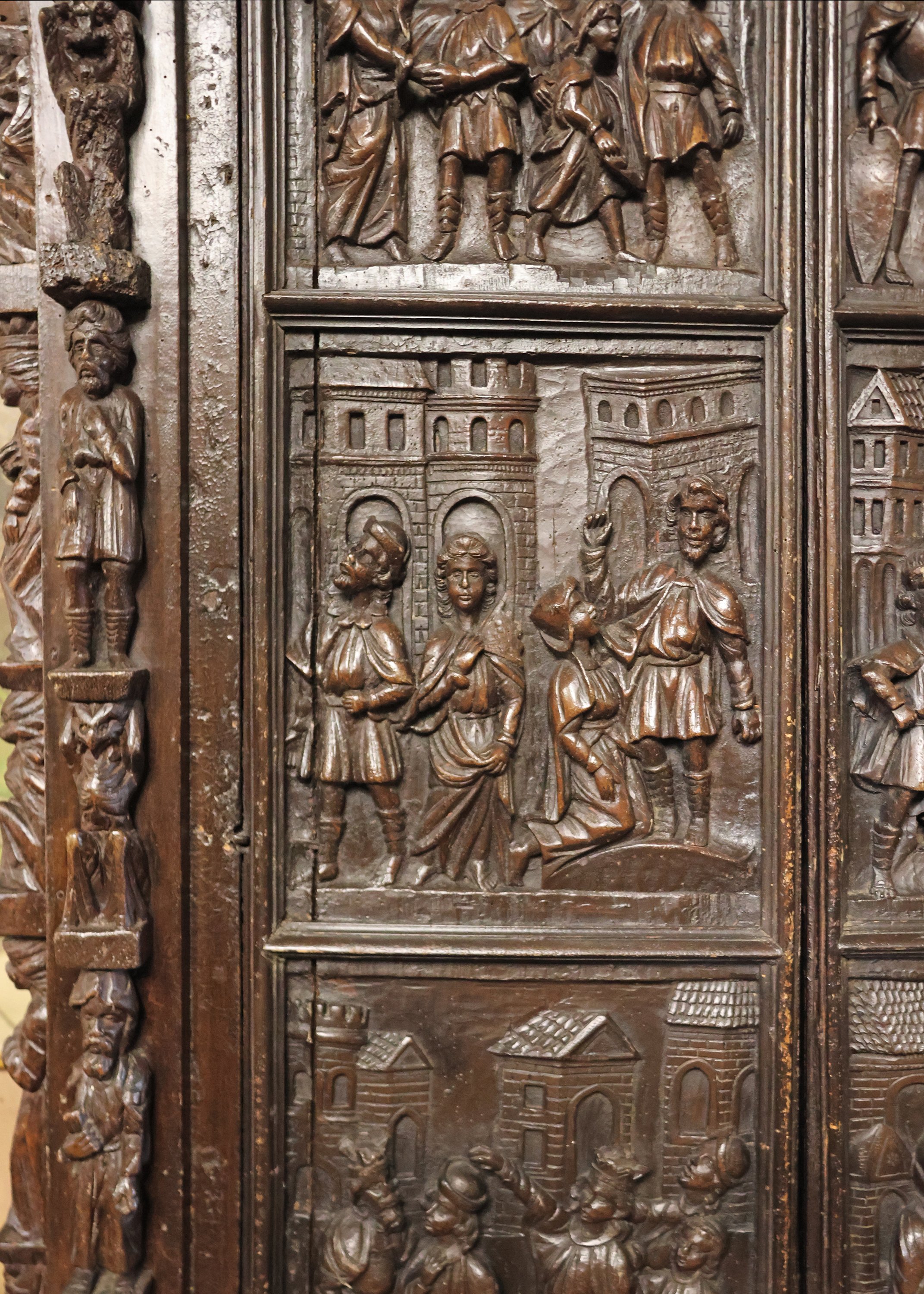
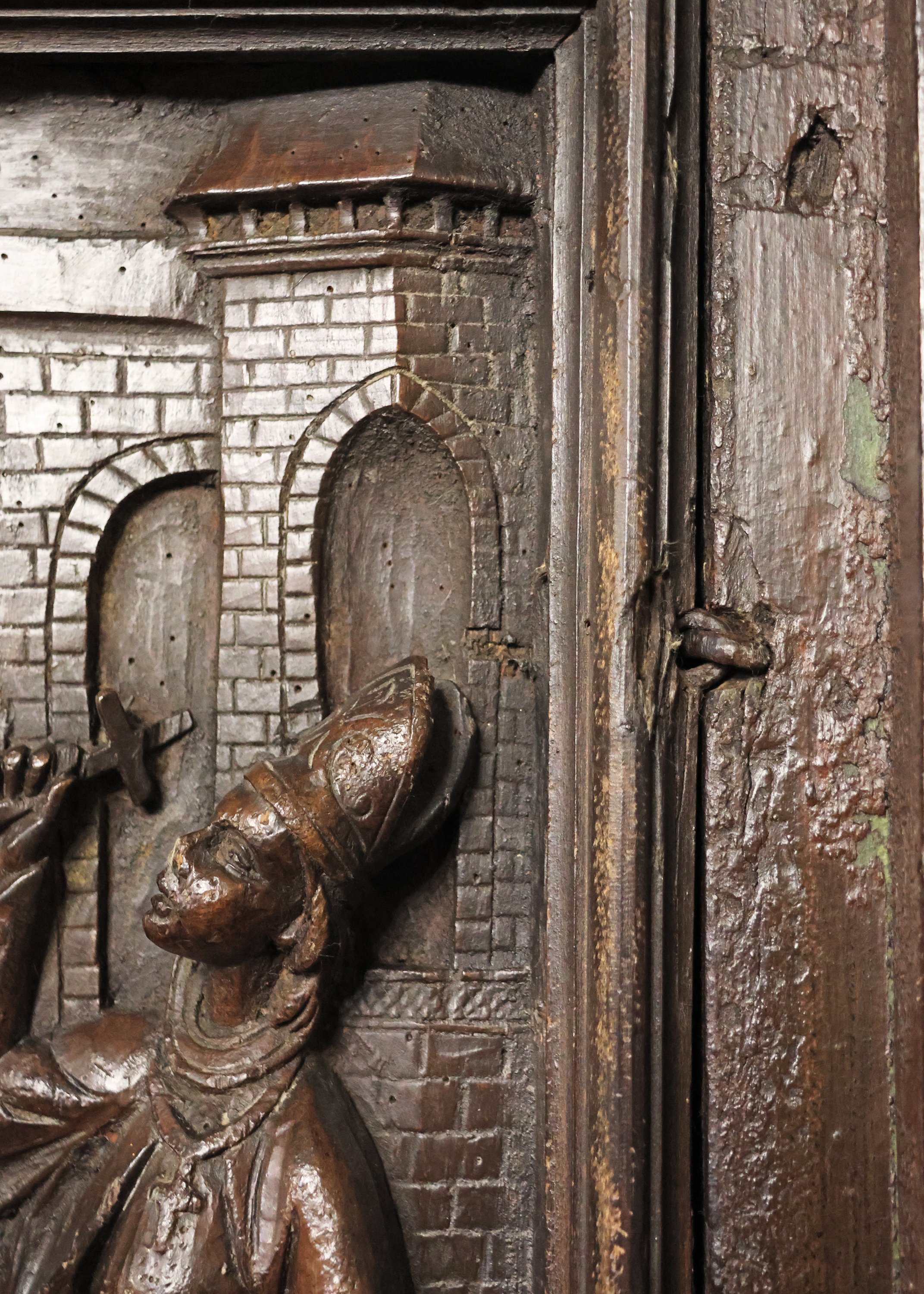
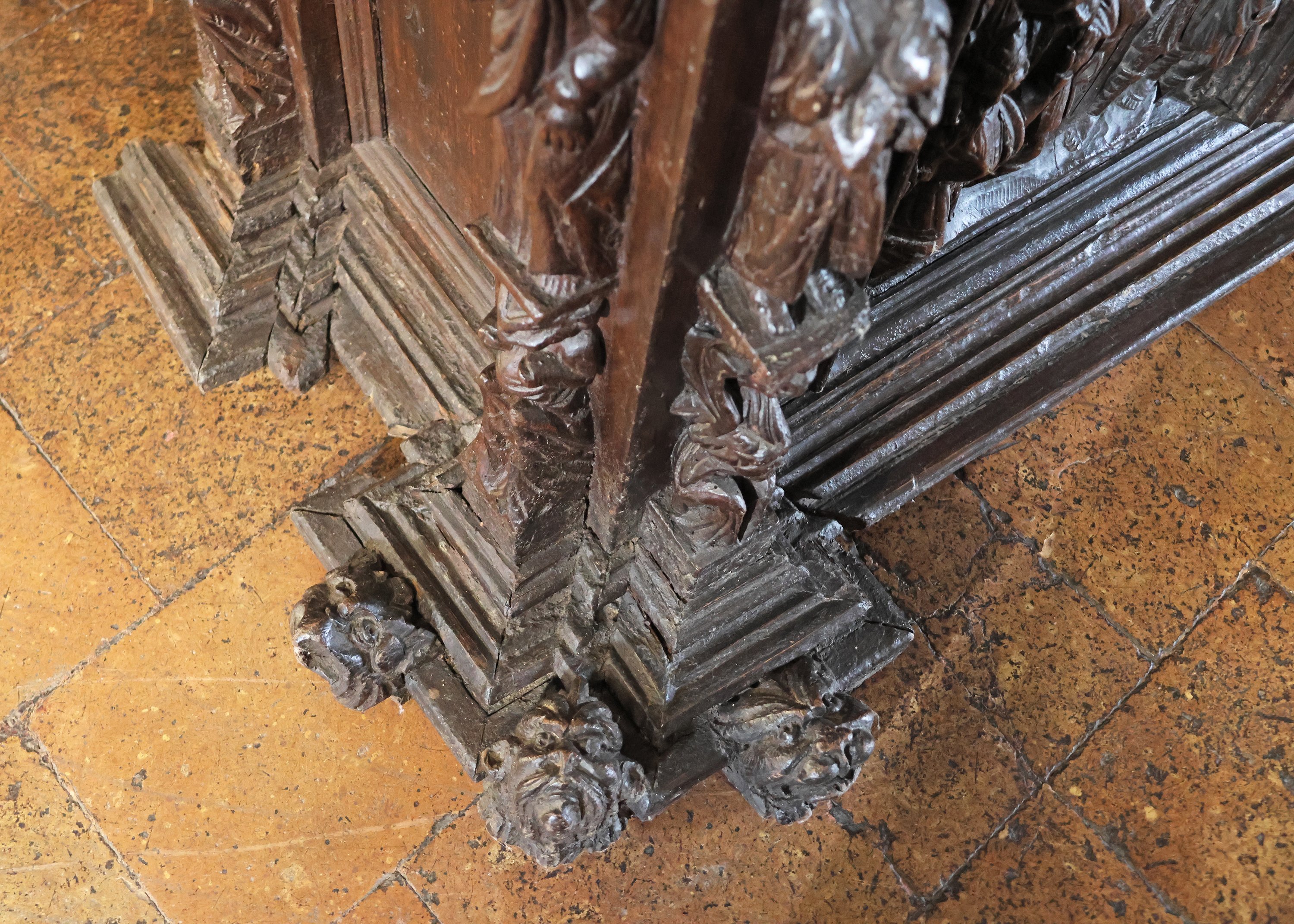
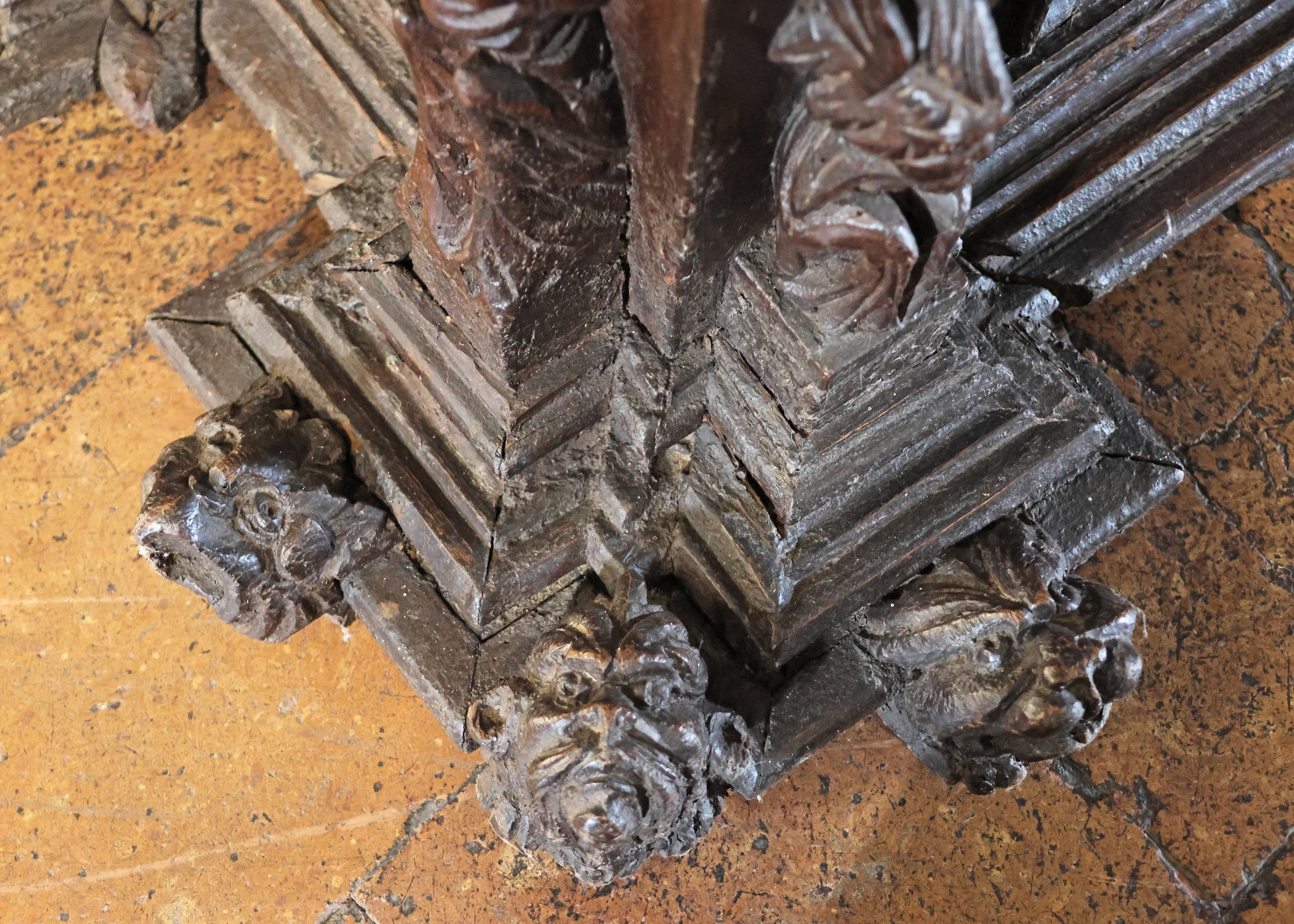
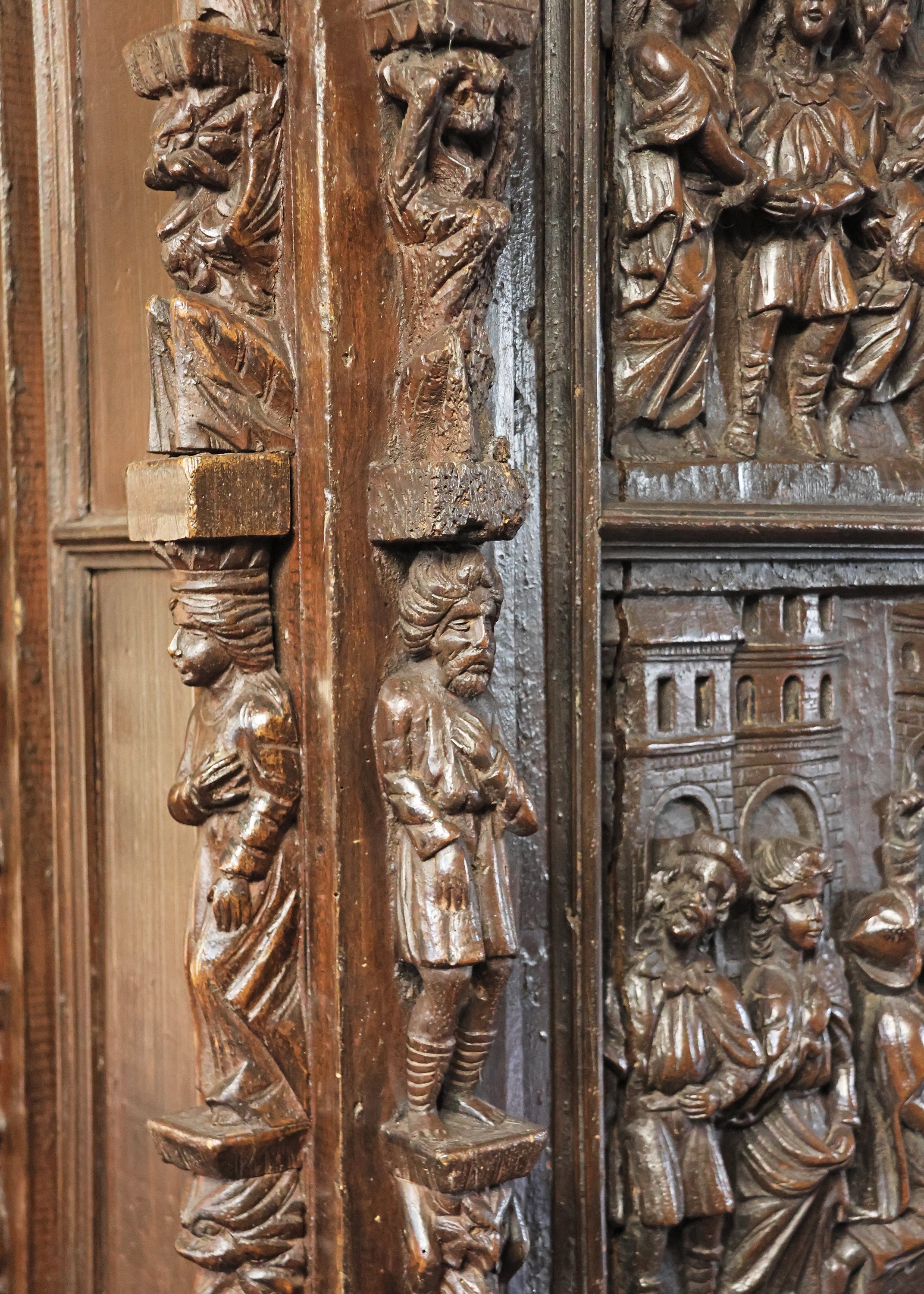
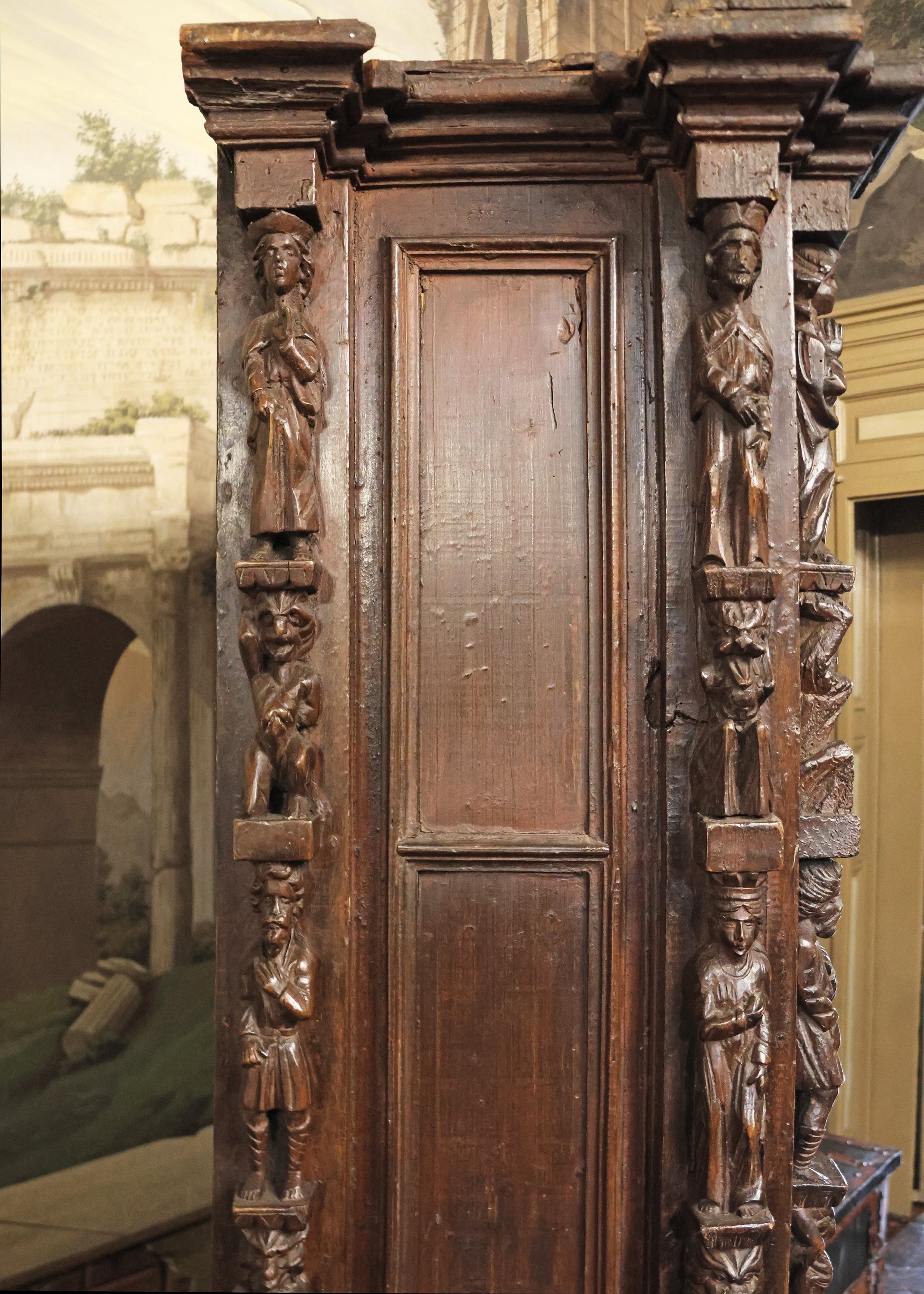
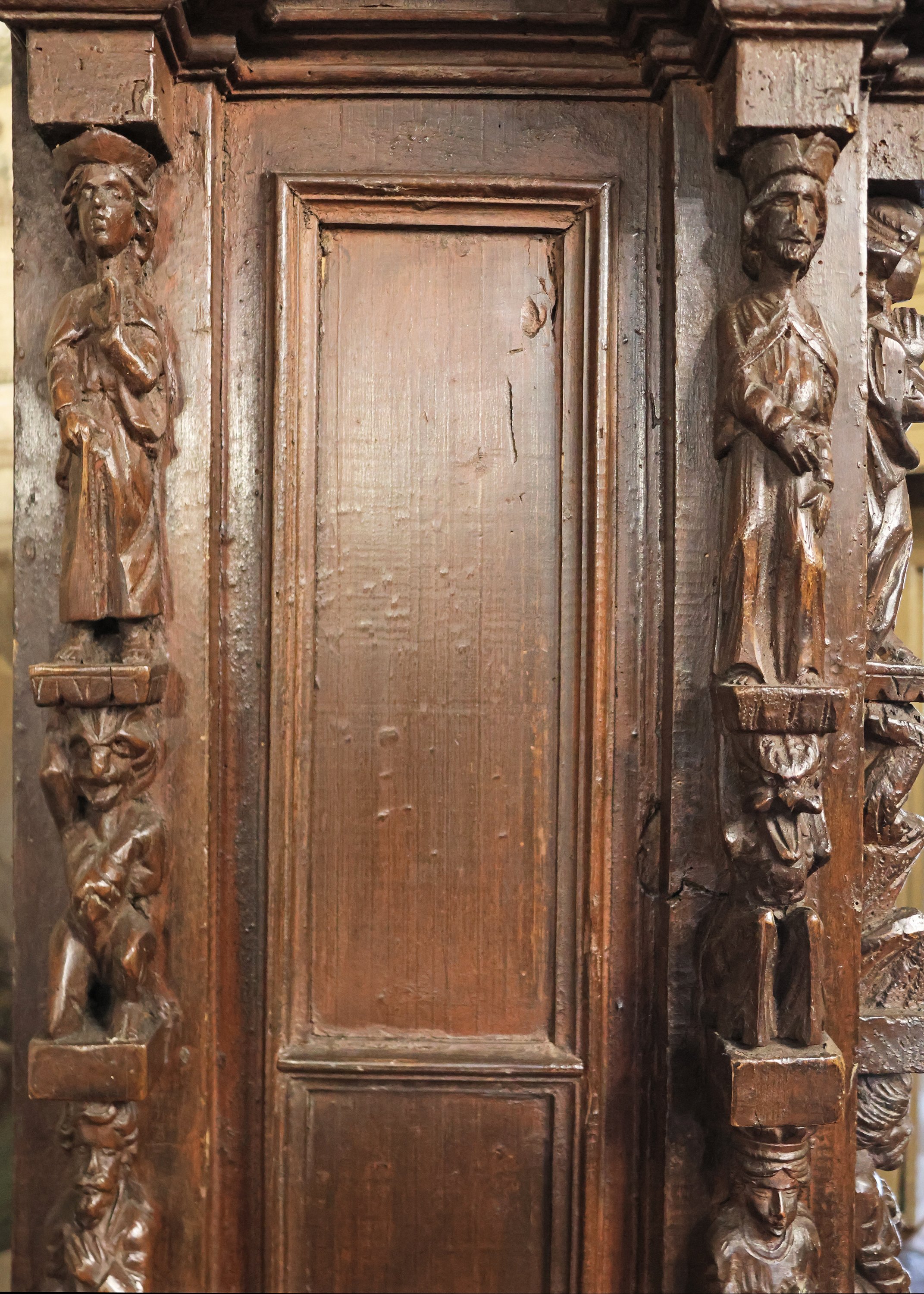
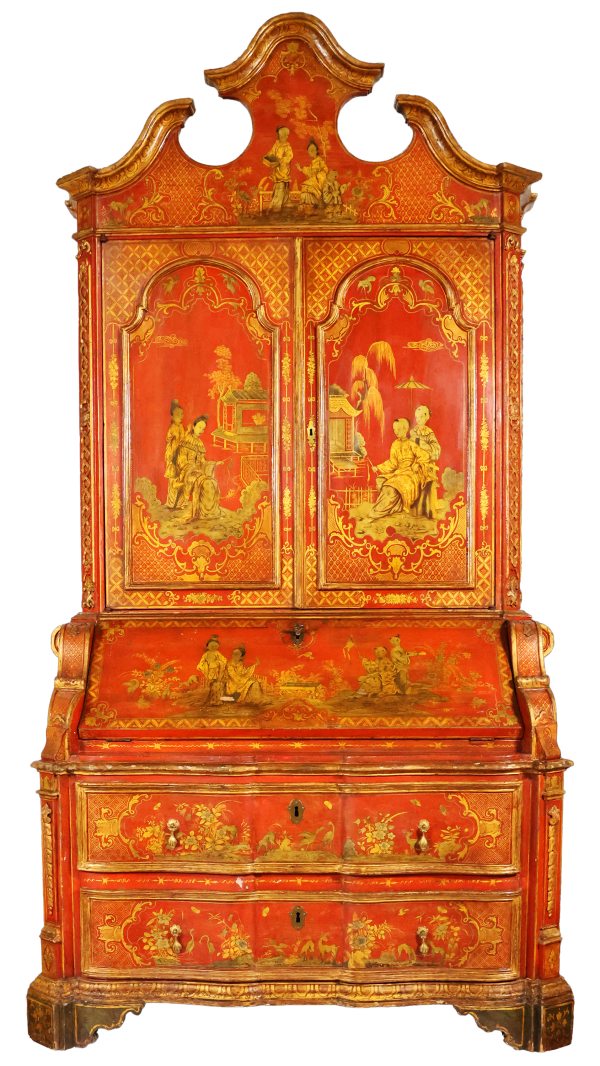
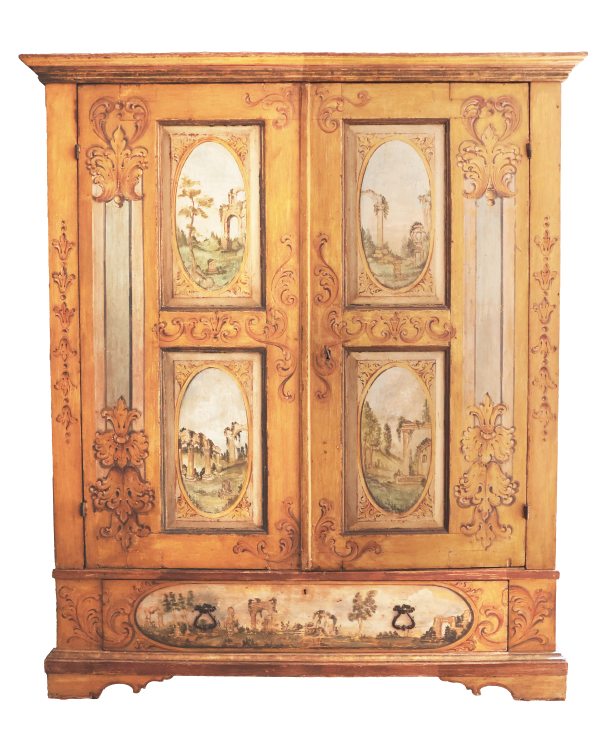
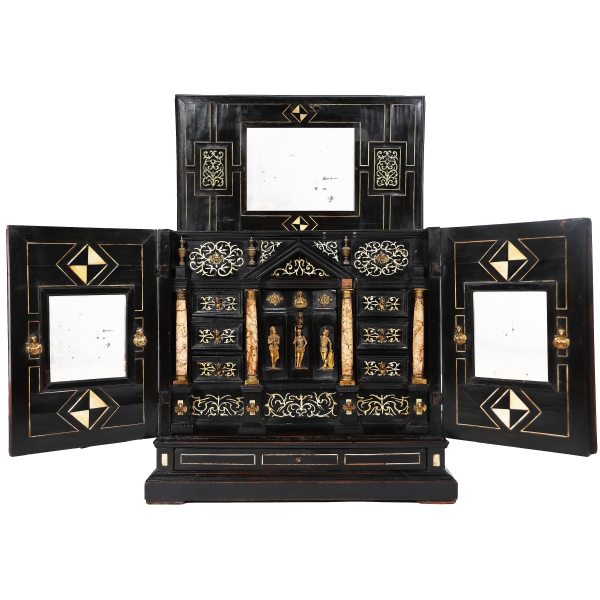
A rare and imposing two door cabinet in wood, richly carved in high relief with figurative scenes. The front, monumental in scale and architectural in design, is arranged around two large doors, each divided into four rectangular panels. Each panel contains a refined historical-biblical or genre scene, populated by numerous figures dressed in period costume, rendered in exquisite detail and set within perspectival compositions featuring architectural backdrops and landscapes characteristic of the Northern European tradition. The lateral pilaster shaped uprights display extraordinary, dense sculptural ornamentation comprising superimposed telamons and caryatids, interspersed with grotesque masks, projecting geometric elements and animal protomes. The strongly projecting, moulded cornice crowns the structure, which rests on a tall base supported by carved feet in the form of leonine masks. The sides are framed with panels featuring undulating geometric designs. The cabinet belongs to the sought-after type of Beeldenkast (figural cabinet), produced in the Netherlands and the regions of northern Germany between the late sixteenth and the very early seventeenth century, during the flourishing of the Northern Renaissance and the emergence of the early Baroque.
Dimensions
57,09in x 24,41in h:86,22in
Provenience
Private collection
Condition
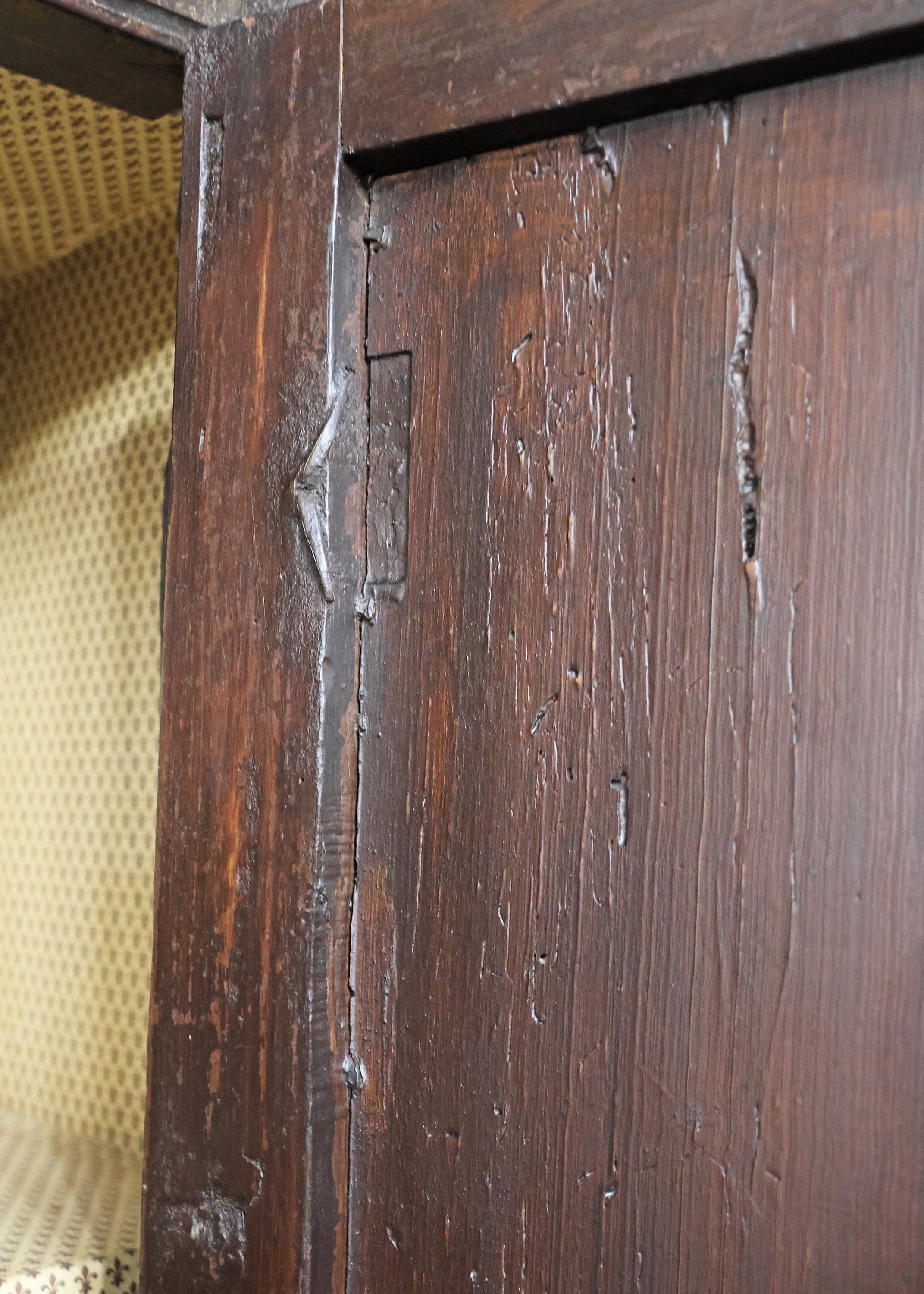
The cabinet is distinguished by its very good overall state of preservation, retaining the originality of its carcass, front sculptures and deep period patina. The only observations concern the normal conservation and maintenance interventions carried out over the centuries:
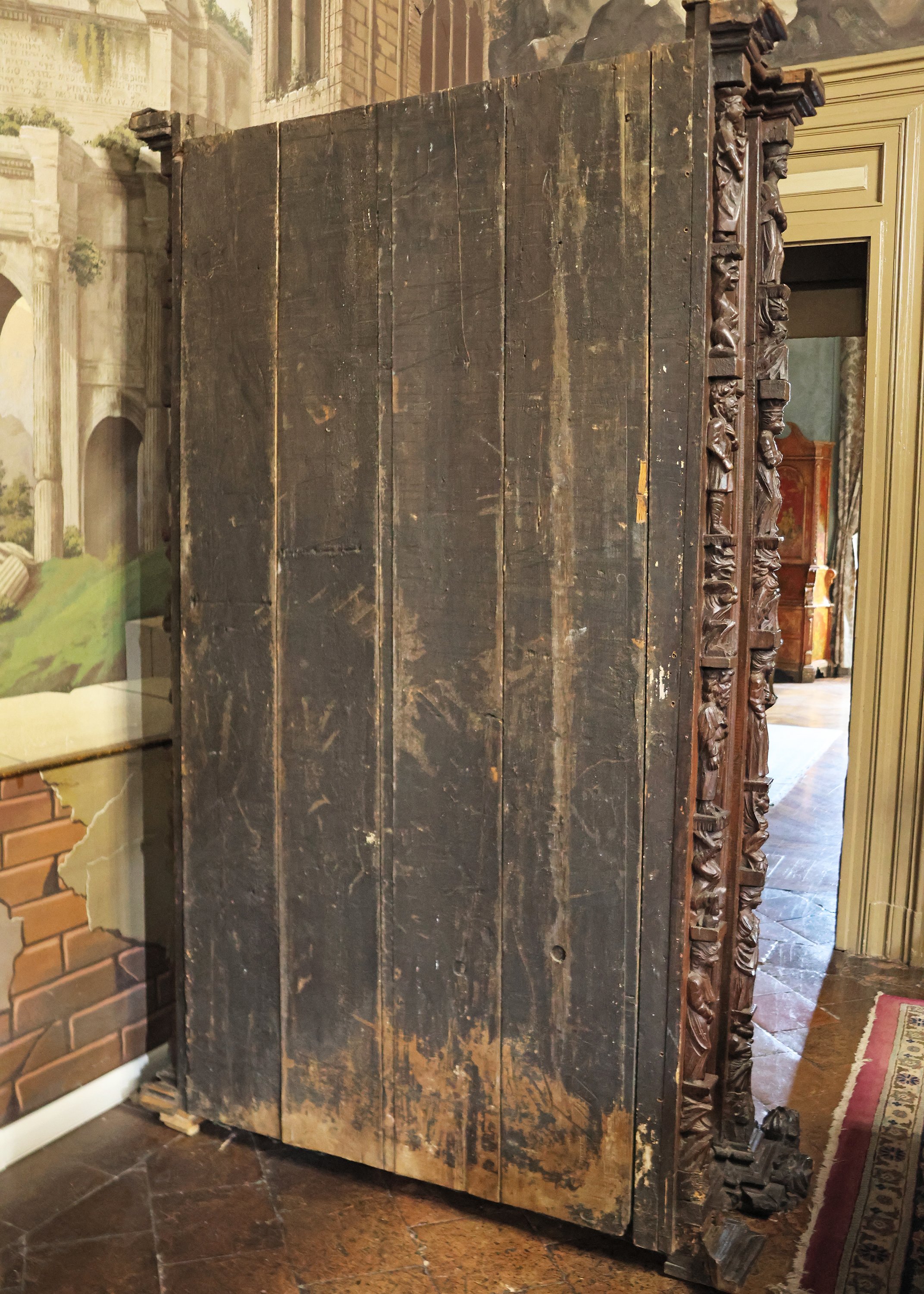
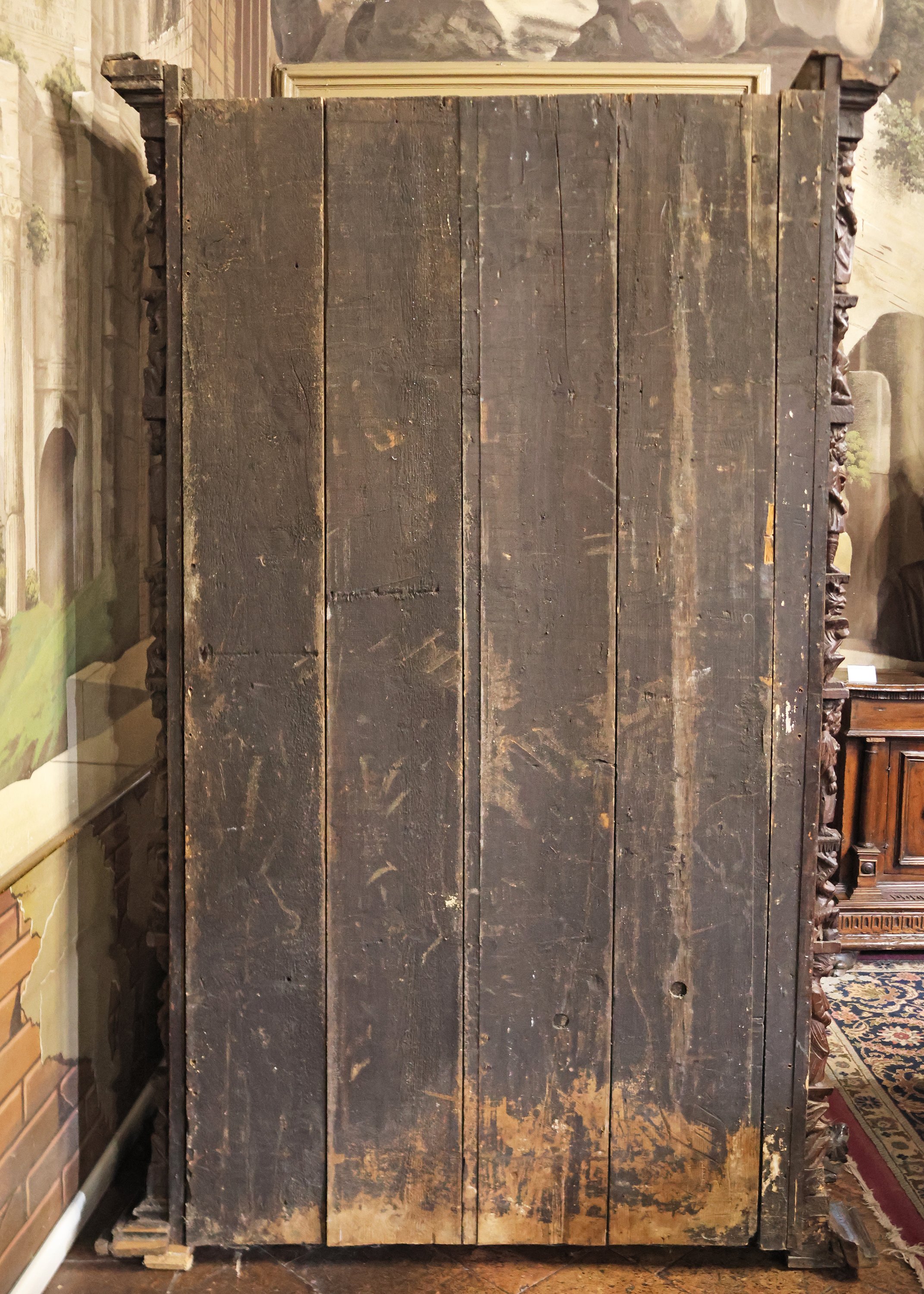
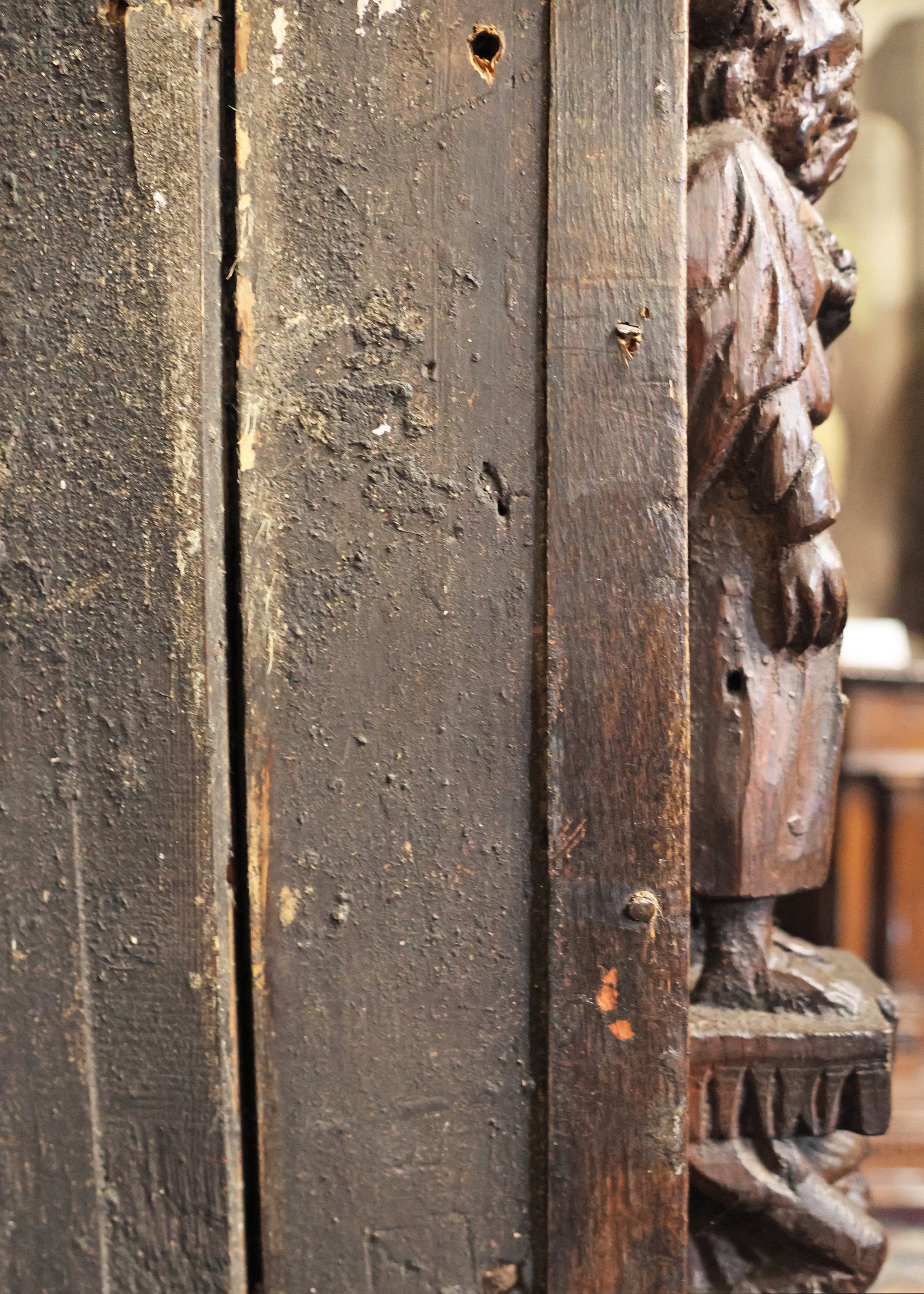
Structural wooden reinforcements: Targeted interventions involving non-original wooden consolidation and reinforcement are present at the base of the cabinet. These were intended to stabilise the imposing structure and counteract the natural movement of the wood over time.
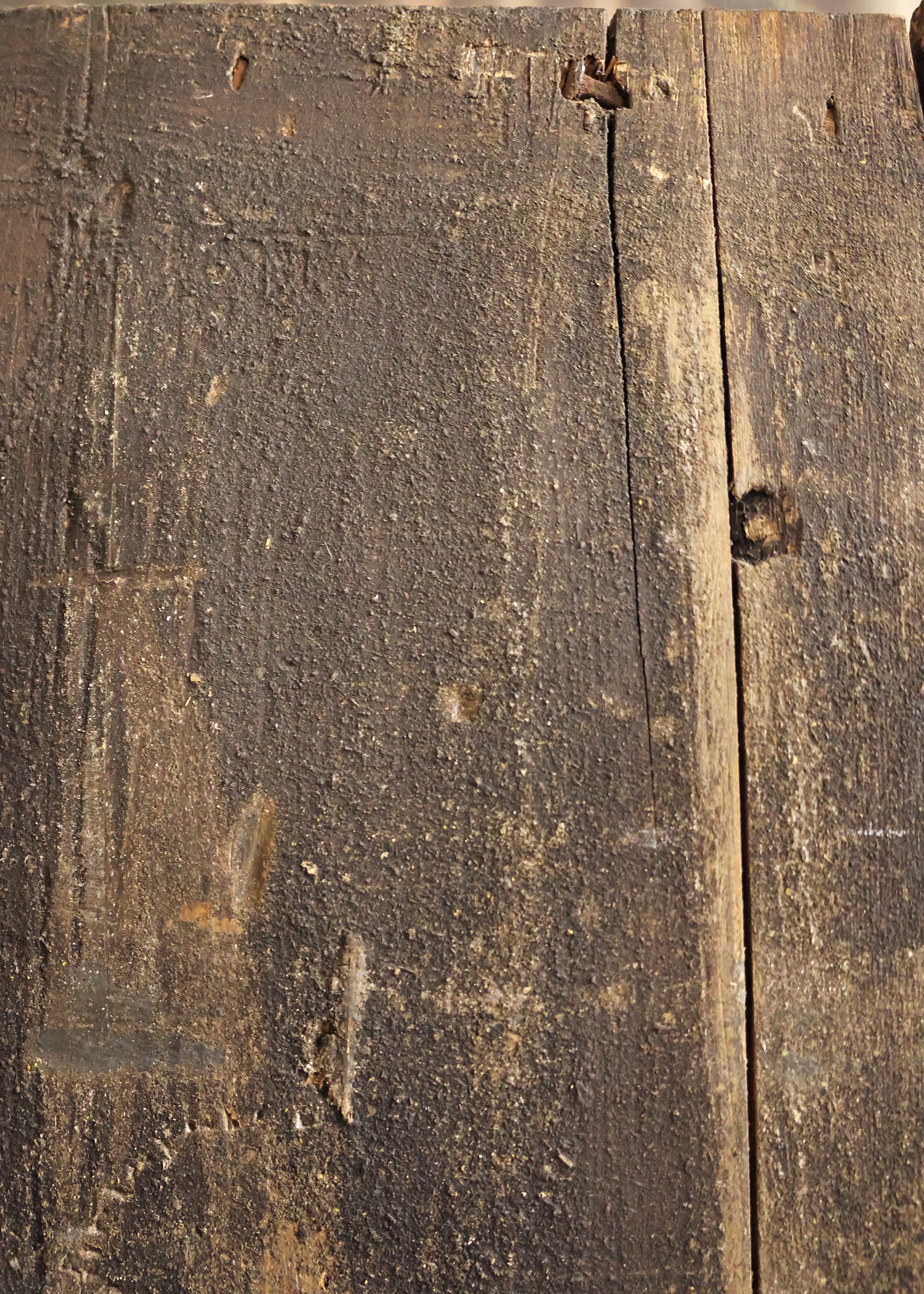
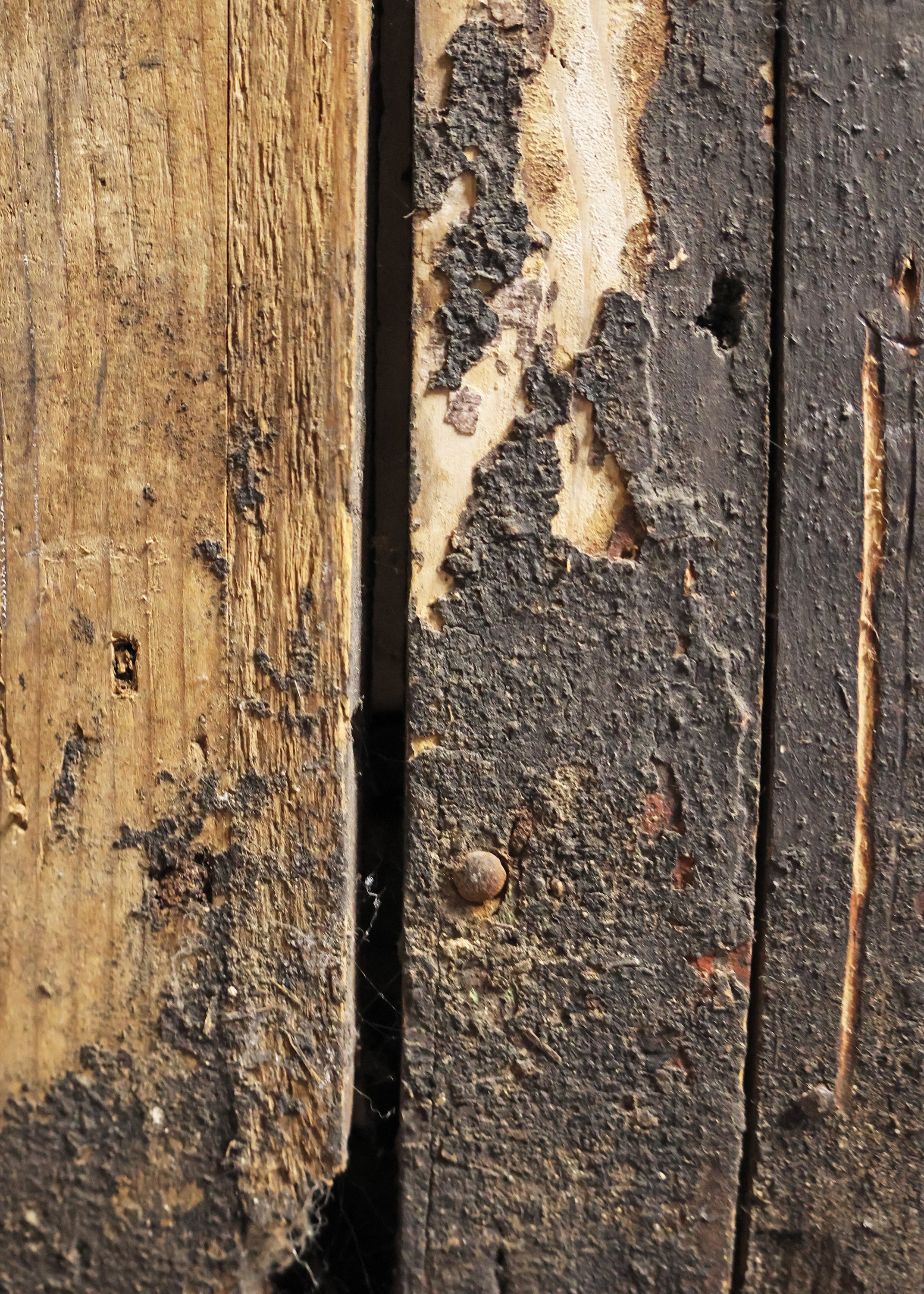
Structural metal reinforcements: Partial and localised additions of non-original nails were made to the uprights and rear panels in subsequent centuries. These interventions were intended to stabilise the natural shrinkage lines of the wood and safely support the considerable weight of the doors and carved pilasters, without altering the original framework.
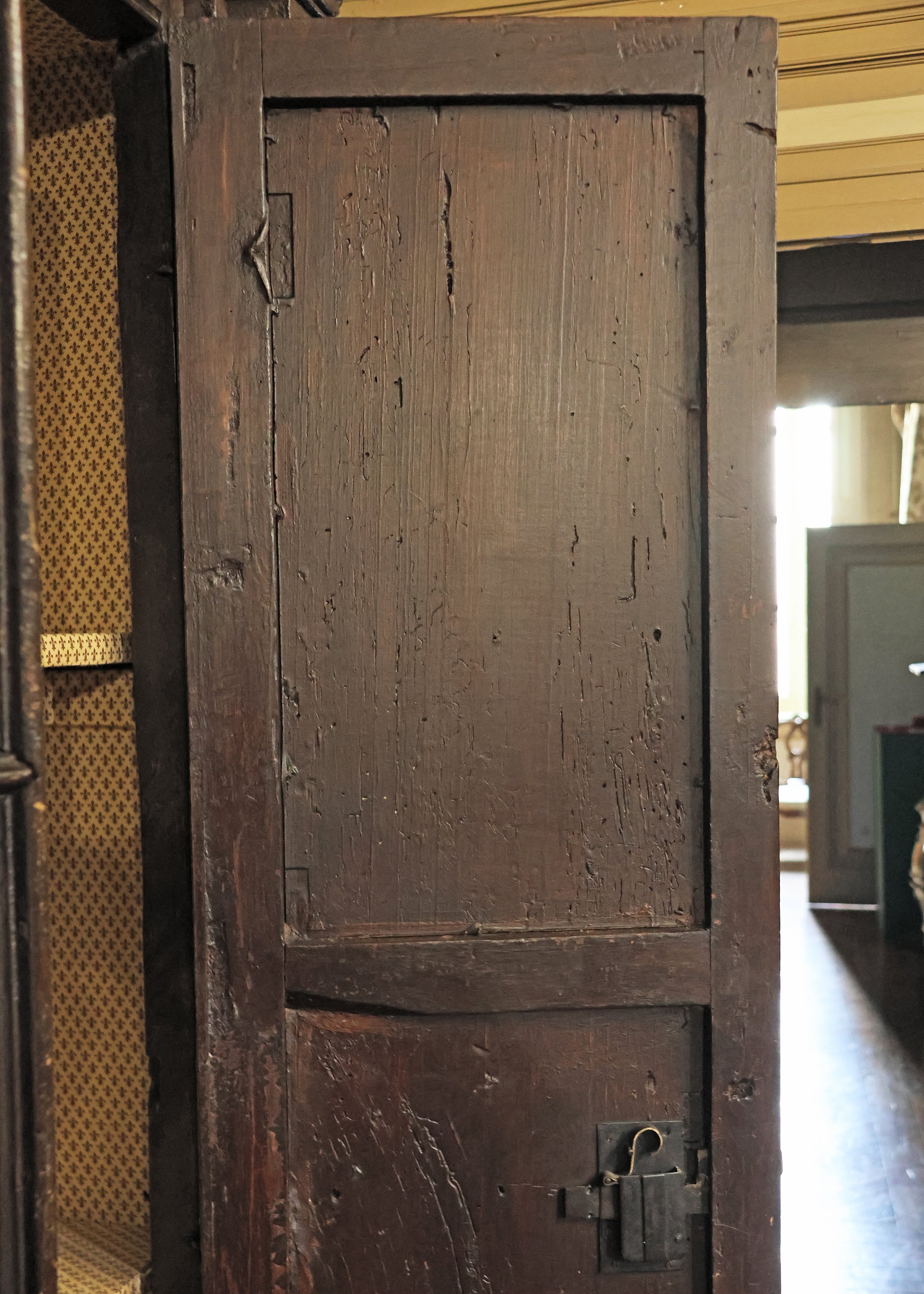
Interior lining: The interior of the back panel and shelves was lined between the late nineteenth and early twentieth centuries with wallpaper decorated with heraldic lilies (fleur-de-lis), showing minor, natural losses resulting from use.
Conservation treatments and patina: Old woodworm holes have been stabilised through previous filling and consolidation treatments. Over time, the exterior surface has been maintained with successive layers of wax finishes and aniline dyes, applied to nourish the wood and harmonise the warm tones of the patina.
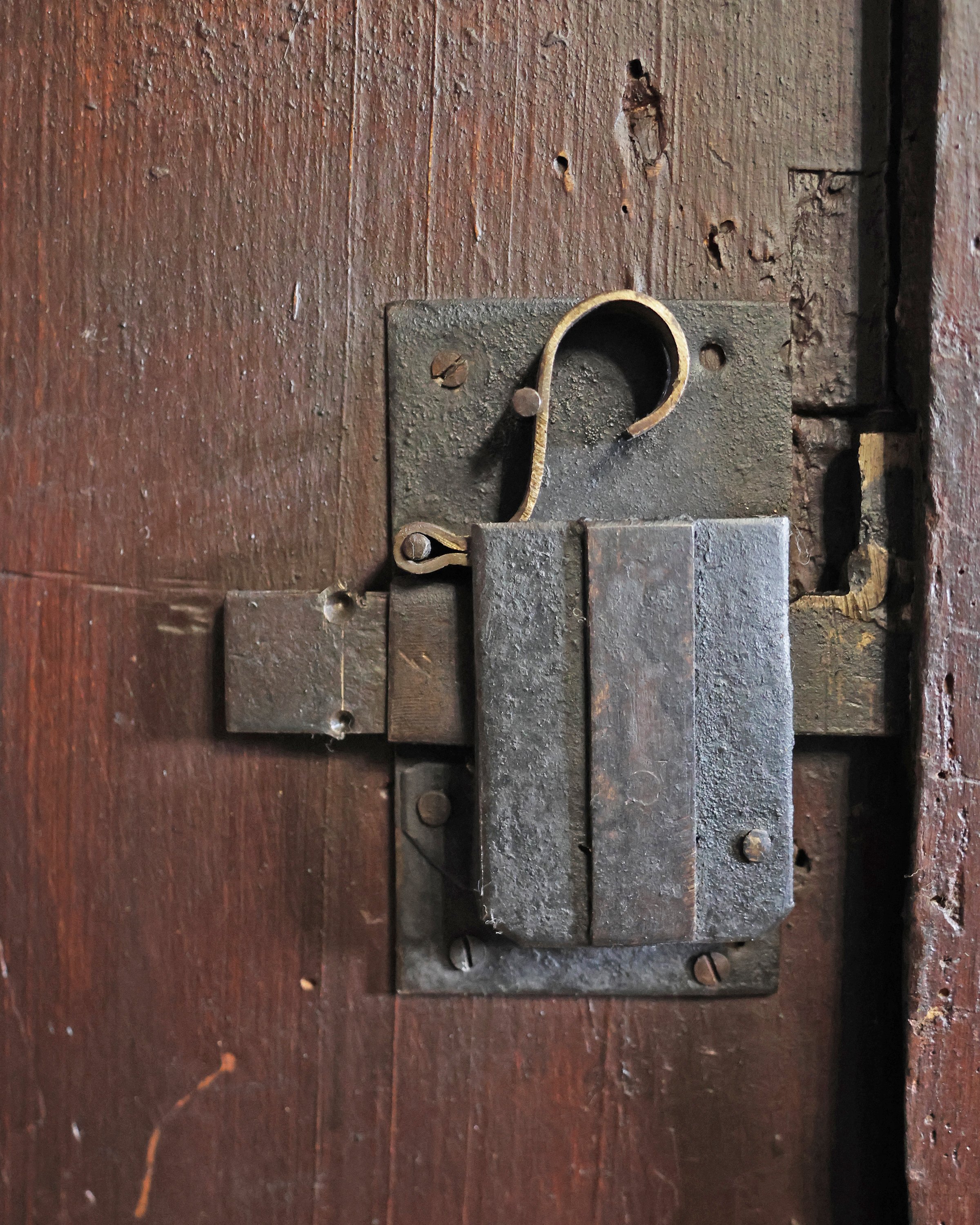
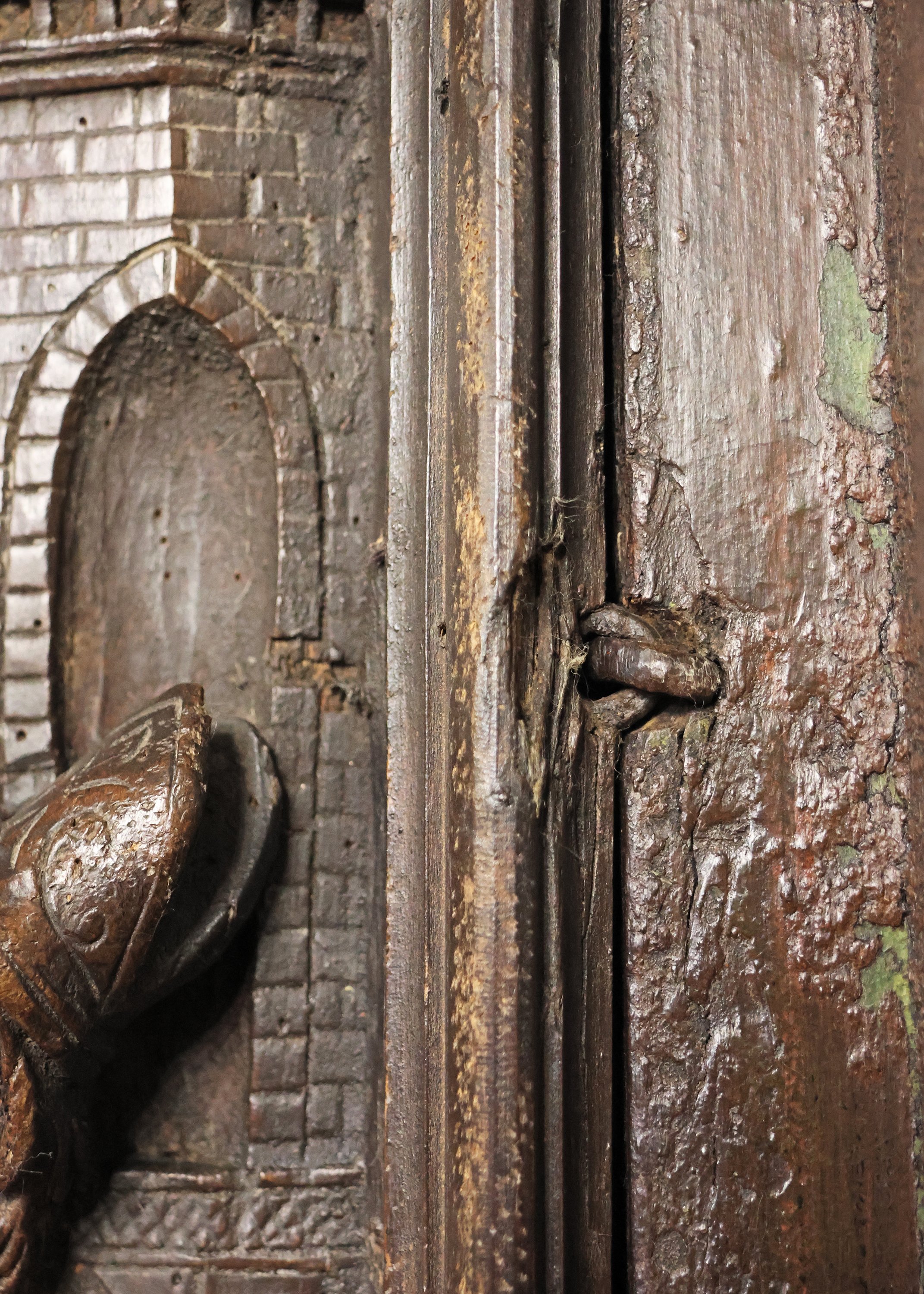
Hardware: Minor adjustments have been made to the historic hinge pins to ensure the proper functioning of the doors. Non-original metal fittings have been installed near the adjoining door to ensure secure fastening and maintain correct alignment with the cabinet body.
Since we are not professional conservators or restorers, we urge you to consult with a restorer or conservator of your choice who will be better able to provide a detailed, professional report. Prospective buyers must understand that any statement made by Coradi Rare Finds is merely a subjective opinion.