
A BIBLIOGRAPHICAL TREASURE IN BRESCIA: PINOCCHIO AT CORADI RARE FINDS, FROM THE ORIGINAL MAGAZINE INSTALMENTS TO THE FIRST BOOK EDITION OF 1883
BRESCIA, October, 12 2026– An invisible yet powerful thread connects the historic rooms of Palazzo Fenaroli, in the heart of Brescia, with the deepest roots of world literature. At the antiquarian gallery Coradi Rare Finds, two landmarks in Italian publishing history are currently available: the collection of Pinocchio as originally serialised in Giornale per i bambini (1881-1883), complete with every instalment of the story, and the exceptionally rare first book edition of 1883, published by Paggi. Together, these works represent a dream acquisition for any major collector or cultural institution.
The Miracle of Giornale per i bambini: Where It All Began
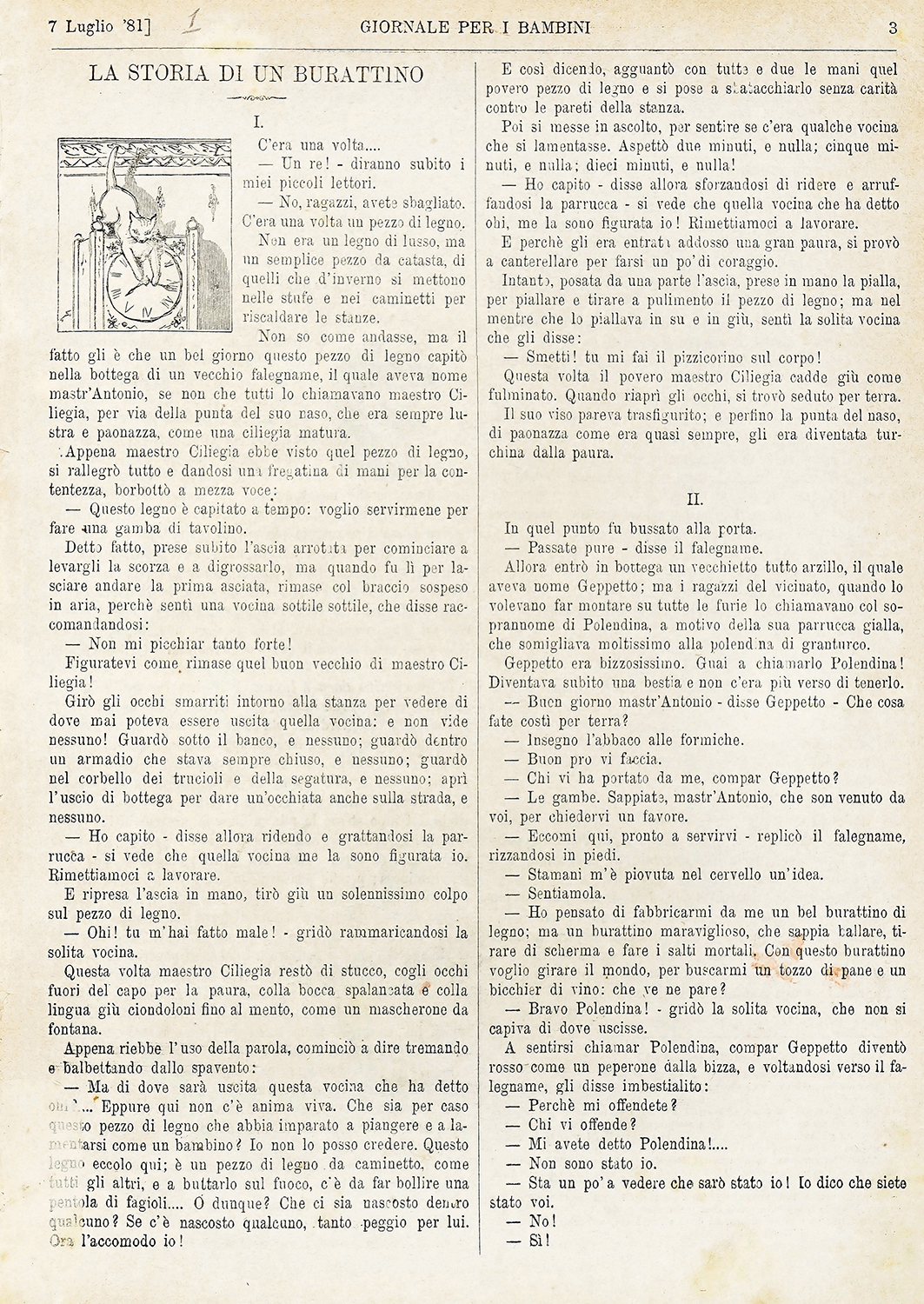
The centrepiece of this exceptional offering is Lot L.1114, a remarkable collection bound in three folio volumes, bringing together nine years of the celebrated post-unification Italian periodical founded by Ferdinando Martini. It was in the very first issue of the magazine, dated 7 July 1881, that Carlo Lorenzini, writing under the pseudonym Carlo Collodi, published the opening lines of La storia di un burattino (The Story of a Puppet), accompanying them with his now famous introductory note: “Ti mando questa bambinata, fanne quel che ti pare; ma se la stampi, pagamela bene, per farmi venir voglia di seguitarla”. [I’m sending you this little piece of childish nonsense; do with it as you please. But if you publish it, pay me well, to encourage me to continue it].
Despite the fragility of nineteenth-century paper and some unavoidable gaps in the overall sequence of the magazine’s issues, the Coradi Rare Finds collection possesses a feature of exceptional bibliographical significance: the entire sequence of instalments devoted to Pinocchio is complete.
From the first 15 chapters, printed by the Fratelli Bencini printing house and ending dramatically with the puppet’s hanging, to the subsequent instalments printed by Edoardo Perino, the collection documents the original publication of Collodi’s story. It includes the period’s distinctive silhouette illustrations and characteristic typographical errors, such as the double numbering of Chapter XVI. The three volumes retain their uniform contemporary half-percaline bindings, with the iconic original red-cloth publisher’s covers mounted on the boards.
From Magazine Pages to Literary Legend: The First Edition of 1883
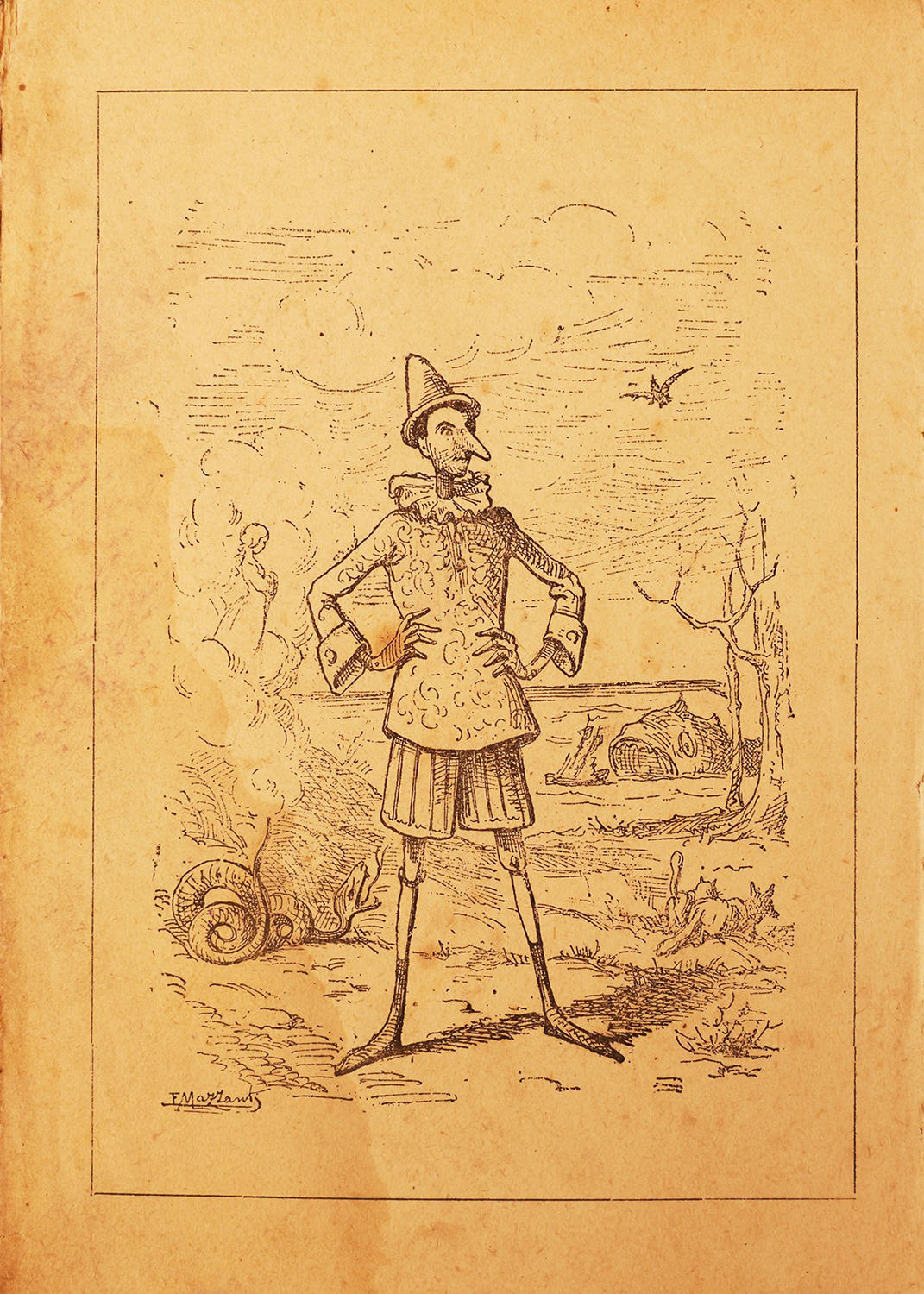
Alongside these precious Roman periodical issues, the Brescia gallery presents the definitive milestone in the work’s early publishing history: the first book edition of Le avventure di Pinocchio, published in Florence by Felice Paggi in 1883. This is the edition that established Pinocchio as a book, enriched by the celebrated illustrations of Enrico Mazzanti, the first illustrator to give the wooden puppet his now iconic visual identity.
The opportunity to encounter both the original serial publication and the first book edition on the antiquarian market represents an event of considerable bibliographical interest. Both works bear witness to an era in which children’s literature was helping to shape the cultural identity of a newly unified Italy, while laying the foundations for a story that would eventually captivate readers across the world. Both works are now available for private viewing and confidential negotiations at Coradi Rare Finds, located in Palazzo Fenaroli in the historic centre of Brescia.